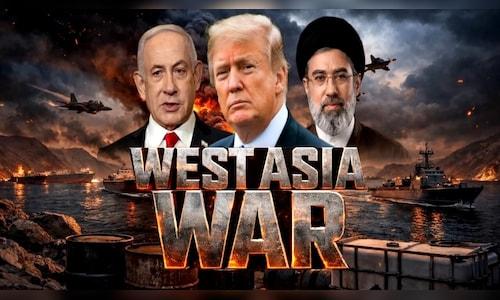
The most common way of describing the present crisis in West Asia is to ask whether the world is moving towards a Third World War. The question is understandable. The region has become an extraordinarily dangerous intersection of military power, unresolved territorial conflicts, nuclear capability, competing alliances and great-power rivalry. The United States remains deeply involved, Israel possesses overwhelming military superiority over most of its immediate neighbours, Iran has developed considerable regional influence, Russia continues to exercise strategic weight and China has emerged as an increasingly important economic and diplomatic actor. Every new confrontation is therefore examined for signs of escalation, and every escalation is placed within the familiar narrative of a world sliding towards another catastrophic global conflict.
Yet this interpretation, however understandable, may be historically inadequate. It treats the present primarily as a military crisis when it may in fact represent something much larger: the weakening of the international political order that developed through European imperial expansion, survived decolonisation in altered forms and acquired its most powerful institutional expression under American leadership after the Second World War. The significance of West Asia may consequently lie less in the possibility that it will trigger another world war than in the fact that it has become one of the principal arenas in which the assumptions of the old international order are being challenged.
Before you read further…
Get the best & trending news directly in your email for free.
This is not to minimise the danger of war. Nor is it to suggest that the great powers have ceased to matter. They matter enormously. The United States possesses unmatched military and financial capabilities; China has become an economic power of historic proportions; Russia remains a significant military and strategic actor; and regional states such as Iran, Turkey, Saudi Arabia and the United Arab Emirates increasingly possess the means to pursue interests that cannot simply be subordinated to the preferences of Washington or any other external power. But great-power rivalry is only one dimension of the transformation. Beneath it lies a more consequential question about who has the authority to shape the international system and whose political imagination is permitted to define the future.
For several centuries, that authority was disproportionately Western. European imperialism did not merely conquer territory. It established a global political economy in which European states accumulated extraordinary economic and military power while large parts of Asia, Africa, the Middle East and Latin America were subordinated to their interests. Colonialism determined borders, redirected trade, reorganised labour and production, appropriated resources and frequently dismantled or subordinated existing political institutions. The modern international system cannot be understood without recognising this history because the distribution of power that exists today did not arise independently of it.
The formal end of colonial rule therefore did not produce an entirely new world. Decolonisation transformed the legal status of states and gave newly independent countries sovereignty, representation at the United Nations and the formal equality of membership in international society. But formal sovereignty and effective sovereignty were never quite the same thing. A country could become independent while remaining economically dependent, militarily vulnerable or strategically constrained. The colonial administrator disappeared, but influence could continue through trade, finance, military alliances, intelligence cooperation, investment, sanctions and diplomatic pressure. Imperialism had changed its instruments rather than simply vanished.
This is particularly evident in West Asia. The region’s modern political geography was shaped profoundly by the collapse of the Ottoman Empire and subsequent European intervention. The mandate system, the division of territories, the creation of new political boundaries and the strategic importance of oil ensured that the region would remain closely connected to the interests of the major Western powers. The establishment of Israel and the unresolved Palestinian question added another enduring conflict to an already heavily internationalised region. During the Cold War, West Asia became an arena in which American and Soviet strategic interests intersected, while the United States gradually emerged as the dominant external power.
The end of the Cold War strengthened that dominance rather than weakening it. The United States possessed a network of alliances, military bases and strategic partnerships extending across the region. Iraq was subjected first to war and sanctions and later to the catastrophic invasion of 2003. Iran remained under sustained American pressure and sanctions. Israel became deeply integrated into the regional security architecture supported by Washington. The Palestinian question remained unresolved despite decades of diplomacy. The conflicts in Libya and Syria further demonstrated the extent to which the Middle East could become a field for competing external interventions.
It is important, however, not to turn this history into a simplistic morality tale in which the West alone possesses agency and the governments and societies of West Asia are passive victims. The region has its own political classes, competing nationalisms, authoritarian traditions, ideological movements, religious currents, economic elites and strategic ambitions. Regional governments have frequently pursued policies that have damaged their own societies, and conflicts within the region cannot be explained exclusively by external intervention. An intellectually serious anti-imperialism must preserve the agency of local actors even while recognising the enormous asymmetry of power within which they have operated.
That distinction is essential to understanding what is now changing. The United States has not ceased to be powerful, nor has Western influence disappeared. What is weakening is something more subtle: the assumption that Western power represents the natural organising principle of international life. States that once depended overwhelmingly upon one external patron now possess more alternatives. China has become an enormous trading partner for much of the world. Russia remains an important military and energy actor. India has expanded its relationships across the Global South while maintaining important ties with the United States and Europe. Regional powers increasingly pursue multiple relationships simultaneously rather than aligning themselves permanently with one great-power bloc.
This is the practical meaning of the emerging multipolarity, but the term needs to be used carefully. Multipolarity is sometimes treated as though it were inherently progressive because it weakens American predominance. There is no historical justification for such confidence. A world with several powerful centres can be as hierarchical and violent as a unipolar world. Indeed, nineteenth-century Europe was a multipolar international system, and it was also an imperial system in which several European powers competed with one another while collectively exercising colonial domination over much of the world.
The important issue, therefore, is not simply whether there will be several poles of power. It is what those poles will do with their power and whether the emergence of multiple centres will create greater autonomy for societies that have historically been subordinate to stronger states. Multipolarity becomes historically meaningful only when it expands political choice. If a country moves from dependence upon Washington to dependence upon Beijing, or from one military patron to another, the structure of dependence has changed less than the geography of the patronage.
This is where the political argument becomes more interesting than conventional geopolitics. The emerging international order should not be judged solely by the number of powerful states it contains. It should also be judged by whether ordinary societies acquire greater capacity to determine their own futures. A genuine post-imperial order would have to connect the sovereignty of states with the sovereignty of peoples. A state may be independent internationally and yet deny meaningful political agency to its own citizens. National independence and popular democracy are related but not identical achievements.
This brings us to a difficult question about democracy itself. For much of the post-war period, Western liberal democracy has been presented as the universal destination of political development. Countries emerging from colonialism were frequently told, explicitly or implicitly, that modernity required the adoption of Western political institutions. Parliamentary elections, competitive parties, constitutional government and liberal individual rights became the accepted vocabulary of political legitimacy. There is much of enormous value in these traditions. The expansion of voting rights, civil liberties, labour rights and social welfare in Western societies resulted from long and often bitter struggles by ordinary people against established power. Those achievements belong to humanity and should not be diminished simply because Western governments also exercised imperial power.
The difficulty arises when one historical form of democracy is transformed into the exclusive definition of democracy itself. Elections are indispensable to representative government, but elections alone do not determine the distribution of political power. A society can have regular elections while enormous economic resources remain concentrated in a relatively small number of hands. Political parties can compete for office while remaining dependent upon established networks of wealth and influence. Media systems can be formally free while ownership is heavily concentrated. Citizens can vote periodically while possessing few institutional mechanisms through which they can influence policy between elections. Governments can change while the fundamental economic and strategic structures of the state remain remarkably stable.
This does not mean that two-party systems are necessarily undemocratic, nor that multiparty systems automatically produce democratic societies. Political science has demonstrated that different electoral systems produce different forms of representation, accountability and political bargaining. The question is more fundamental: how much effective power does the citizen possess over the institutions that govern his or her life?
The answer in many contemporary democracies is less straightforward than the conventional celebration of electoral politics suggests. Economic inequality can become political inequality because those with greater resources have greater access to political institutions, information and influence. Corporate interests can shape policy without ever appearing on a ballot. Bureaucratic and security establishments can possess considerable autonomy. Foreign policy can remain remarkably insulated from public preferences. Elections can therefore change governments without necessarily transforming the deeper relationships through which power operates.
The appropriate response is not to discard representative democracy but to deepen it. Democracy should be understood as a continuing relationship between citizens and institutions rather than simply an event that occurs every few years. It should involve meaningful participation in local government, workplaces, professional institutions, universities, civic organisations and other structures through which social decisions are made. The question should increasingly become not merely who governs, but who participates in governing, who controls resources and how effectively citizens can challenge decisions made in their name.
Such a conception of democracy has implications for the political future of West Asia because it allows us to escape an unproductive binary. The choice is not necessarily between authoritarianism and a wholesale imitation of Westminster or Washington. The GCC states are monarchies and should not be described as liberal democracies. But acknowledging that fact does not require the conclusion that their political development must follow an identical Western path. Nor does economic success automatically establish democratic legitimacy. What it does mean is that political modernity cannot sensibly be defined as the compulsory imitation of one historical experience.
The Gulf monarchies offer an especially interesting case because economic and social transformation is occurring without a corresponding transformation into Western parliamentary systems. Saudi Arabia, the United Arab Emirates, Qatar and Oman have different political structures and different degrees of political participation, but they are all experiencing profound changes in their economic relationships, social organisation and international orientation. Their expanding relationships with China and other Asian powers demonstrate that their external strategic choices are becoming more diversified. This does not make them democratic. It does, however, demonstrate that political and economic modernisation do not necessarily follow a single Western script.
The question for West Asia should therefore be more open-ended. What forms of participation are compatible with the region’s own historical experiences? Can consultative institutions acquire greater authority? Can municipalities and professional organisations become stronger sites of public participation? Can economic transformation be accompanied by wider social accountability? Can citizenship acquire a deeper political meaning? Can political representation become more continuous rather than being confined to periodic elections?
There is no reason to assume that the answers will reproduce the political history of Britain, France or the United States. Nor should there be. A genuinely decolonised political imagination would allow societies to learn from different traditions without being required to reproduce them.
This is also why the current transformation of West Asia should not be understood simply as an anti-American phenomenon. Saudi Arabia’s expanding relationship with China does not mean that it has abandoned Washington. The Gulf states continue to depend upon American security relationships while simultaneously developing extensive economic and diplomatic connections with Asia. Turkey remains a member of NATO while pursuing its own regional interests. India maintains relations with the United States while retaining important ties with Russia and deepening its engagement with other parts of the Global South. Such behaviour is better understood as strategic diversification than as ideological realignment.
The significance of diversification is considerable. For countries historically accustomed to operating within a Western-dominated international environment, having alternatives increases bargaining power. It allows governments to pursue relationships according to their interests rather than according to the preferences of a single external power. But once again, this is not itself emancipation. Strategic autonomy creates possibilities; it does not determine how those possibilities will be used.
The danger is that the world may simply move from one form of dependency to several. China, Russia, India, Iran, Turkey and the Gulf states all possess their own national interests. None should be romanticised simply because it challenges Western power. Anti-imperialism loses its intellectual credibility when it becomes an exercise in replacing one object of loyalty with another. A country should not be considered emancipatory merely because it opposes Washington, just as an alliance with Washington does not automatically make another country illegitimate.
The deeper objective must be to make international relations less hierarchical.
This is where Palestine becomes central. The Palestinian question is not merely another regional conflict. It represents one of the most persistent contradictions in the international system because the principles of sovereign equality, territorial integrity, human rights and international law have coexisted for decades with the occupation and dispossession of Palestinians. The conflict has survived repeated diplomatic initiatives, changing American administrations and shifting regional alliances. Its persistence is evidence of the inability of the existing international order to resolve a question that has profound implications for its own claims to universality.
Gaza has intensified this crisis of legitimacy because the destruction has been witnessed globally and almost continuously. The political significance lies not only in the scale of Palestinian suffering but in the manner in which that suffering has exposed the gap between proclaimed universal principles and their application. Western governments and societies are not monolithic; many citizens, journalists, academics, churches, Jewish organisations, human-rights groups and political movements in Western countries have strongly criticised Israeli policy and demanded Palestinian rights. Nevertheless, the willingness of major Western governments to continue supporting Israel while invoking international law elsewhere has created a profound credibility problem.
For much of the Global South, this is not a new discovery. Colonial history has long produced scepticism about the universal claims of Western powers. But Palestine has given that scepticism a contemporary focus. It has demonstrated that the crisis of the international system is not simply about military power. It is about legitimacy. If international law can be invoked against some states and effectively suspended when applied to others, then the problem is not merely enforcement. The problem is the political credibility of the system itself.
This explains why Palestine occupies a larger place in the emerging politics of the Global South than its geographical size would suggest. It has become associated with the broader demand for equality in international relations. The question being asked is not simply whether Palestinians will obtain a particular political settlement. It is whether a system that claims to be based upon universal principles can continue to function while applying those principles selectively.
The answer to that question will have consequences far beyond Palestine.
If the emerging multipolar order simply produces new alliances while preserving the same hierarchy of international legitimacy, then very little fundamental will have changed. But if the transition creates stronger demands for equal application of international law, greater representation within global institutions and more genuine autonomy for developing societies, then the crisis of West Asia may become part of a much larger transformation.
This is why the idea of a post-Western world needs to be distinguished from an anti-Western world. There is a difference between rejecting Western supremacy and rejecting Western civilisation. The latter would be historically and intellectually absurd. Western societies have produced enormous contributions to literature, science, philosophy, law, social reform and democratic politics. Their own citizens fought imperialism, racism, economic exploitation and authoritarianism. Many of the universal principles invoked today emerged partly from those struggles.
But universal principles cannot belong exclusively to the civilisation that helped articulate them. Human rights do not become Western property because European thinkers wrote about them. Democracy does not become European property because modern parliamentary institutions developed in Europe. Freedom cannot be reduced to a Western cultural inheritance. These concepts acquire their real universality only when they can be claimed equally by Palestinians, Arabs, Africans, Asians and Latin Americans, including when those claims challenge the interests of powerful states.
This is the deeper meaning of decolonisation. It is not merely the removal of foreign administrators. It is the recovery of the right to define political possibility without permanent external tutelage.
Such decolonisation must also take place within states. A society cannot be genuinely liberated if its government exercises sovereignty internationally while denying political agency domestically. Nor can democracy be considered complete if citizens possess formal equality while economic structures place enormous concentrations of power beyond democratic accountability.
The future therefore requires a conversation between national sovereignty and popular sovereignty. States must be free to determine their international relationships, but citizens must also possess meaningful influence over the governments that make those decisions. Economic sovereignty must likewise be connected to social justice. A country that controls its natural resources but concentrates their benefits among a narrow elite has achieved national control without necessarily achieving popular emancipation.
This is where the debate over the future of democracy becomes inseparable from the debate over capitalism, ownership and economic power. If democracy means merely the right to select governments, then vast areas of social life remain outside democratic consideration. Yet decisions about land, housing, employment, energy, natural resources, technology, education and finance determine the practical conditions within which citizens live. Political democracy cannot indefinitely ignore economic power and still claim to represent substantive equality.
The emerging world therefore has an opportunity to broaden the meaning of democracy. Representative institutions will remain necessary, but they can be complemented by stronger local government, participatory structures, civic organisations, workers’ institutions and mechanisms of public deliberation. Different societies will undoubtedly develop different forms. That diversity should be regarded as a strength rather than a failure to conform to one universal model.
The alternative is simply to reproduce the political vocabulary of the twentieth century.
That would be unfortunate because the twenty-first century is already changing the conditions under which politics operates. Information moves across borders almost instantaneously. Economic relationships are increasingly distributed across regions. States have multiple sources of investment and technology. Populations are more connected. Civil society can organise internationally without waiting for governments. Regional organisations are becoming more important. The authority of traditional Western institutions is increasingly contested.
The international system is consequently becoming more complex than the old language of a single hegemon versus its rivals suggests.
The question is whether this complexity will lead to greater political equality or merely more complicated competition.
That remains unresolved.
It is entirely possible that multipolarity could generate new forms of militarism. States that acquire greater autonomy may also acquire greater willingness to use force. Regional powers may compete more aggressively. The decline of one dominant power can create uncertainty and miscalculation. International institutions may weaken before they are successfully reformed. The danger of major war is therefore real.
But this is precisely why the Third World War narrative, while understandable, is insufficient. It focuses attention on the possibility of military catastrophe without asking what historical transformation is producing the instability. The important task is not to deny the danger but to understand the transition that creates it.
Declining hegemonies rarely disappear peacefully. States accustomed to privilege attempt to preserve their influence. Alliances become more important. Economic restrictions increase. Strategic competition intensifies. Rival powers are described as existential threats. The language of civilisation and security becomes more prominent. But such resistance cannot reverse structural changes indefinitely.
The United States may remain the most powerful military state in the world for many years. Europe will remain economically and politically important. Western institutions will continue to exercise influence. None of this is in doubt. What is changing is the capacity of Western power to define the political choices of the entire world without serious competition.
That is the real historical significance of multipolarity.
The world is acquiring more room for manoeuvre.
The question is what societies will do with that room.
West Asia is perhaps the most revealing place in which to observe the process because the region contains nearly all the contradictions at once. It contains monarchies undergoing rapid economic transformation, republics struggling with internal political conflicts, states resisting Western pressure, countries balancing among several great powers, societies affected by colonial boundaries and wars, and above all Palestine, where the unresolved legacy of colonialism continues to challenge the legitimacy of the international order.
The region is therefore not simply moving from American influence towards Chinese or Russian influence. Something more complicated is taking place. The external field of possibilities is widening. States are gaining greater room to manoeuvre. The monopoly of one strategic system is weakening. But the political consequences remain uncertain.
This uncertainty should not frighten us into nostalgia for the old order.
The old order was never as stable or benign as its defenders sometimes suggest. Its stability often depended upon military superiority, unequal economic relations, client governments and the suppression of conflicts that were never politically resolved. What is now appearing as disorder may partly be the visibility of contradictions that the previous system managed to contain rather than solve.
A more plural international system may therefore initially look less orderly because more interests are being expressed. The challenge is to develop institutions capable of managing that plurality without returning to imperial hierarchy.
This requires reform of international institutions, particularly those created in the aftermath of the Second World War. The distribution of representation in global institutions no longer corresponds adequately to the demographic, economic and political realities of the twenty-first century. The continued concentration of decisive authority in a handful of states is increasingly difficult to reconcile with the principle of sovereign equality.
But institutional reform will not be sufficient. The deeper reform must be intellectual.
The world has to abandon the assumption that political modernity has a single geographical origin and therefore a single legitimate institutional form. It must abandon the habit of treating the Global South as a collection of countries that have not yet reached the political maturity of the West. It must also abandon the opposite temptation of assuming that every non-Western system is inherently more authentic or emancipatory.
Neither Western triumphalism nor anti-Western romanticism is adequate to the historical moment.
The task is to construct a genuinely plural political modernity.
Such a modernity would recognise that different societies may combine representation, participation, social welfare, local governance, economic organisation and cultural traditions in different ways. It would judge institutions by their ability to protect human dignity, distribute power, enable participation and restrain arbitrary authority rather than by their resemblance to any particular Western model.
This is where the political future of West Asia becomes particularly important. The region may eventually produce institutional experiments that do not fit neatly into the categories inherited from either European liberalism or twentieth-century authoritarianism. Some may succeed; others will fail. Some may be democratic; others may not. But the intellectual space for experimentation should exist.
A post-Western world will not be created simply by changing the flags outside diplomatic buildings. It will require a transformation in the relationship between peoples and power.
That is ultimately why the present moment matters.
The fires of West Asia are revealing the limits of an international order that has depended too heavily upon concentrated power and selective legitimacy. They are also revealing the possibilities created when that concentration begins to weaken. The outcome is not predetermined. A multipolar world can become a world of competing nationalisms, arms races and authoritarianisms. It can also become a world in which greater strategic autonomy allows societies to experiment with deeper forms of political participation and economic justice.
The choice will not be made by Washington, Beijing, Moscow or any other capital alone. It will be shaped by the political struggles taking place within societies themselves.
That is why the question of the future should not be reduced to who replaces America.
The more important question is whether America, China, Russia, India, Europe and the major powers will eventually cease to be treated as the permanent authors of world history.
For centuries, ordinary people have repeatedly been told that history is something made by emperors, presidents, generals and diplomats. Yet the great transformations of human history have also been produced by workers, peasants, women, students, intellectuals, social movements and ordinary citizens whose collective action altered institutions that once appeared permanent.
The international order is no different.
States create structures, but peoples give those structures legitimacy. Governments can proclaim sovereignty, but citizens determine whether sovereignty has social meaning. International institutions can declare universal principles, but their legitimacy ultimately depends upon whether those principles are applied universally.
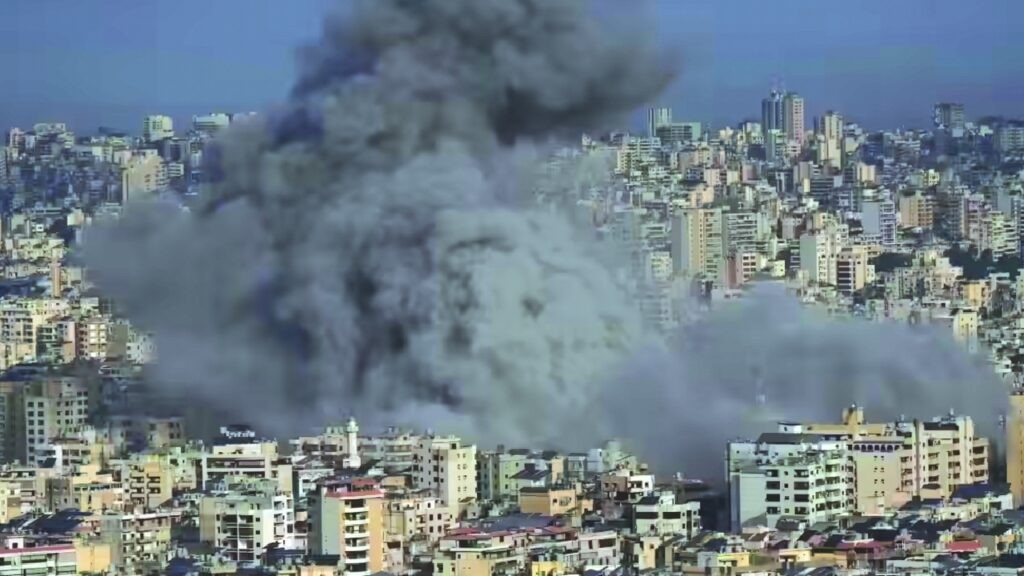
West Asia is on fire because these questions can no longer be postponed.
The region is not simply witnessing another contest between great powers. It is confronting the accumulated contradictions of colonial history, national sovereignty, military power, economic dependency, political legitimacy and the unresolved question of Palestine. At the same time, the emergence of new centres of economic and strategic power is weakening the assumption that the West can permanently define the parameters within which these questions must be answered.
That does not mean that a new world has already arrived.
It means that the old one is becoming less capable of determining what the new one must look like.
This is perhaps the most important distinction between the present moment and earlier geopolitical transitions. The objective should not be to construct another hierarchy in which one civilisation or state inherits the authority previously exercised by another. The purpose of a genuinely post-imperial order should be to make hierarchy itself less central to international politics.
The future of West Asia should therefore not be decided by Washington, nor should it be predetermined by Beijing, Moscow or any other external centre. The peoples of the region must possess the political space to shape their own futures. That principle applies equally to Palestine, Iran, the Arab states, Turkey and every other society whose political choices have historically been constrained by external power.
The same principle must apply to the rest of the Global South.
A world beyond Western hegemony cannot simply be a world in which the West loses and somebody else wins. It must be a world in which the very idea of permanent winners and permanent subjects becomes less acceptable.
That is a much more difficult project than changing alliances, but it is also a much more worthwhile one.
The present crisis may therefore be understood not as the inevitable prelude to a Third World War but as a dangerous stage in the transition from one international order to another. War remains possible, and the danger should never be underestimated. But the deeper historical process concerns the redistribution of authority, the erosion of Western political monopoly, the emergence of strategic autonomy across the Global South and the possibility of constructing forms of political modernity that do not require imitation.
Whether this transition produces a more democratic world remains an open question.
It will depend upon whether multipolarity becomes merely a rearrangement of state power or whether it creates conditions in which peoples acquire greater control over the institutions that govern them. It will depend upon whether national sovereignty is connected to popular sovereignty, whether international law becomes genuinely universal, whether economic power becomes subject to democratic scrutiny and whether political modernity is finally released from the assumption that it has a single geographical model.
West Asia is therefore not simply burning.
It is undergoing a historical struggle over what comes next.
The old order is still powerful, but its intellectual authority has weakened. The new order has acquired material foundations, but its political meaning remains uncertain. Between them lies a period of instability in which governments will compete, institutions will be contested and societies will struggle over the direction of change.
The most consequential question is not which power will dominate that struggle.
It is whether domination itself can cease to be the organising principle.
If that possibility seems ambitious, it is because the history of the modern world has trained us to imagine politics through empires, great powers and competing centres of authority. Yet history is not obliged to reproduce its previous forms indefinitely. The end of one order does not have to produce another version of the same order.
Perhaps the historical opportunity before us is to move beyond the assumption that humanity requires an imperial centre.
Perhaps the significance of West Asia on fire is that, amid the destruction, the political geography of the world is being reopened.
And perhaps the most important task of the coming decades will be to ensure that this opening is not captured by another hegemon, but used to enlarge the capacity of peoples everywhere to participate in determining what their societies, their states and their common world should become.