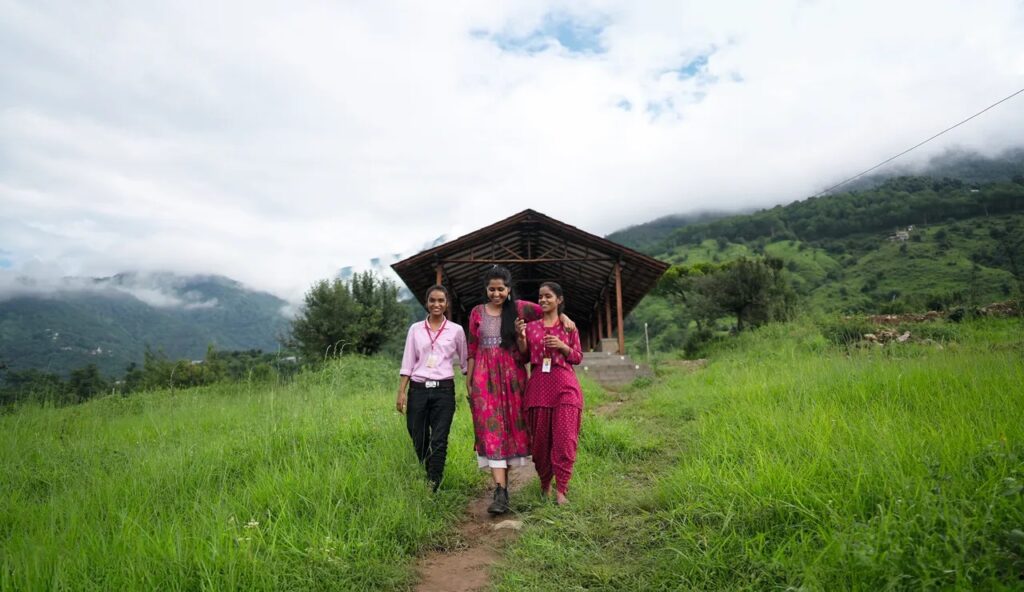
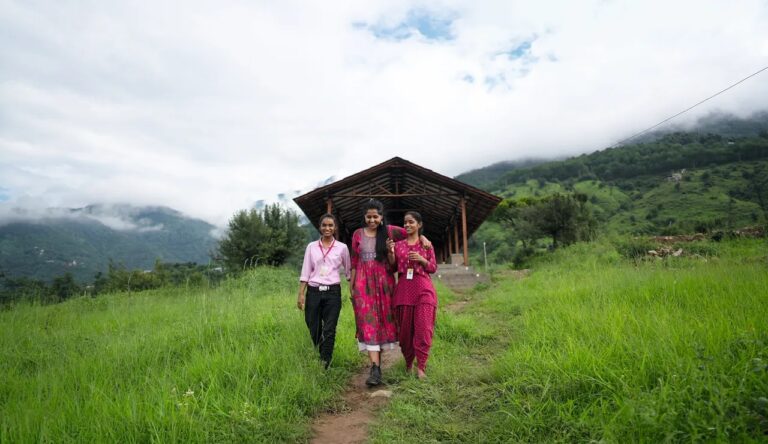
In Katrasin, a village in Bihar, a group of five-year-old boys is upset. They have been denied a haircut since birth. One person is to blame: their cousin, Phula Kumari. As per village tradition, boys are allowed their first haircut only when a wedding takes place in the family. Phula, the eldest daughter, should have been married at 15, as is the norm in Katrasin, but even at 22, she has no such intention. She is too busy building her career as a curriculum developer, curating and delivering mini-MBA sessions to empower other women in rural India to build careers of their own in the modern world.
The 22-year-old’s success as the highest earner in Katrasin has disrupted the village’s traditional social order. While some parents are now rushing to marry off their daughters by 13 or 14, fearing Phula’s influence, it may already be too late to prevent change. Young girls are increasingly dreaming of owning laptops, travelling outside their villages and pursuing careers, just like Phula Didi. After finishing school, Sonmanti, Phula’s younger sibling, insisted on enrolling at Sajhe Sapne, the same nonprofit that offered her sister MBA training. Today, she too earns a steady income as a teacher at Har Hath Kalam, a reputed organisation that works with slum kids in Patiala, Punjab.
Research from Western countries suggests that women earning more than men can negatively impact relationships within the family, especially between spouses. Phula and Sonmanti’s stories offer a new hypothesis grounded in social change: when daughters earn more than their fathers, how does it affect the breadwinner-dependant dynamic? Before they became full-time working women, Phula and Sonmanti conversed with their father in monosyllables. He responded with grunts and nods. But ever since the sisters joined the workforce, their father seeks their advice on everything farm-related: “Should we get labourers or rent a machine for tilling the soil? Which seeds and fertilisers would be best suited? Can I use the bricks you bought for the rooms to build a makeshift cowshed for the winter?” he asks, eager to listen to what they have to say. Often, people think that when feminists ask for power, they are asking to replace patriarchs with matriarchs. But Phula’s father’s joy has become intertwined with his daughters’ freedom. He has found saathis, or friends, in his grown-up daughters. Their empowerment means that his days of loneliness and the pressure to be the sole earning member of the family are at an end.
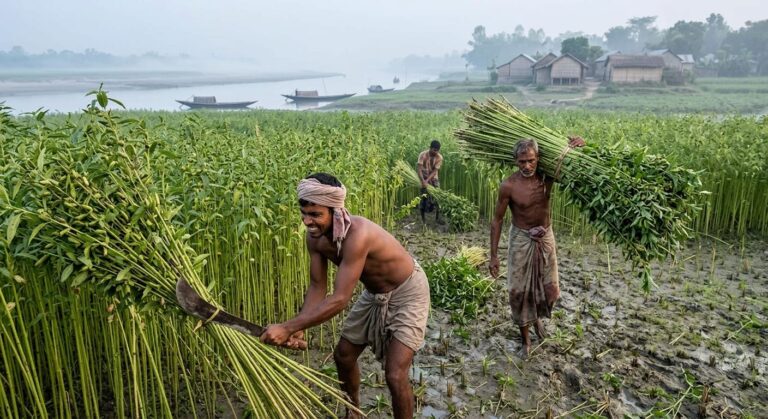
Practitioners working in gender advocacy have observed that when young women in rural India try to fly the nest, it’s often the brothers, not fathers, who become barriers to their dreams. These bhaiyyas, chachas, mamas and jijus hold power over the choices of the women in their families, controlling their education and employment. Patriarchy explains the algebra of oppression here: women’s freedom is directly proportional to the shattering of the role that men hold as ‘protectors of the family’s honour’. When women earn more, their mobility and access to smartphones increase, which results in them exercising their choice to buy things, talk to men and cross the proverbial ‘lakshman rekha’. In many cases, it’s the unemployed brother who disapproves of his sister earning a livelihood for the family. For young men, it seems money is not survival. Social standing is. The question, then, is how much money is enough to convince families to take the ‘reputational risk’ of letting a young woman step outside the house to build a career? At what salary level does ‘beti ki kamai ka khana’ become a cause for celebration rather than shame? It’s not just how much but how consistently the women earn that changes the power dynamics in the family. In rural areas, where farming is the prevalent occupation and monthly incomes depend on crop performance, drawing a regular salary is a rarity. Even less so for women, whose farm work often gets categorised as unpaid labour or an extension of their household duties. In the case of 19-year-old Neha Yadav, who lives in Madhopura, a village in Madhya Pradesh, gainful employment may have just saved her sister’s life.
In Bundelkhand, women of the Yadav family work on the farms growing up. First, they are daughters, then they become daughters-in-law—always cleaning the table but never having a seat at one. At 19, Yadav’s elder sister was married off to a man she had never met, without being asked for approval or giving her acquiescence. When Yadav tried to object, her father promptly shut her down. Not satisfied with only controlling his wife’s life, Yadav’s new jiju soon began to meddle in her affairs too, opposing her decision to pursue a primary math educator course away from her village. Her desperate pleas to her father paid off, and she now works in Haryana as a life-skills teacher for children outside the education system or those at risk of being pushed out, earning more than her father and brother-in-law every month. It’s something this family of farmers has never seen before.
Yadav’s father has not asked her to marry yet. Instead, he called her one evening for counsel. “What do you think we should do?” he asked earnestly. It was a case of in-laws getting greedy for gold and Yadav’s sister’s life was at stake. She advised her sister not to keep silent. “Agar tum galat nahi ho toh jawaab do, chup nahi rehna hai. Ghar bhej diya toh bhi theek, chup nahi rehna hai.” (If you are not wrong, do not stay silent. If they send you back home, it’ll be alright. Speak up.) Yadav’s firm yet soft-spoken stance resounds like the quiet murmur of water wearing down a rock. Beyond supporting and sustaining her family, she has also bought freedom and fearlessness to stand up against the same man who once opposed her growth. Neha’s story is heartening but exposes a harsh truth about India’s patriarchal landscape: men’s worth is assumed but women have to constantly prove theirs. Men are trusted until they fail but women must prove themselves before they’re trusted at all. In Kandbari, Himachal Pradesh, 20-year-old Pallavi Thakur hates the thought of one day having to discharge daughter-in-law duties. Simran Lama (21) aspires to be a motovlogger. Their mothers sit with their heads in their hands. What will become of their daughters? Thakur and Lama decided to start a business selling something that no man in the village could destroy in a fit of misdirected rage: code to develop websites and mobile applications, taught to them by the educators at Sajhe Sapne.
Both girls have spent most of their lives explaining their choices and asking for permission for everything they do. Now, Thakur contributes both monetarily and in decisions about household matters. Like Phula and her father, there’s an ease to the father-daughter relationship in this home too. So much so that a recurring joke slips into conversations between Thakur and her father: “Bhai nithaala hi hai. Mai property waste nahi karna chahta, tumko dunga apni zameen” (I would rather give you my property than give it to your jobless brother). Thakur is not sure if this is a prank or a promise, but the fact that these words have been spoken out loud and are currently floating around the universe, ready to come true not only for her but for every woman who shares her dream, is more than enough. (This story appears in Vogue India).