Taslima Nasrin’s return to Kolkata: the bhadralok’s balancing act between liberalism and Islamophobia
Mehebub Sahana
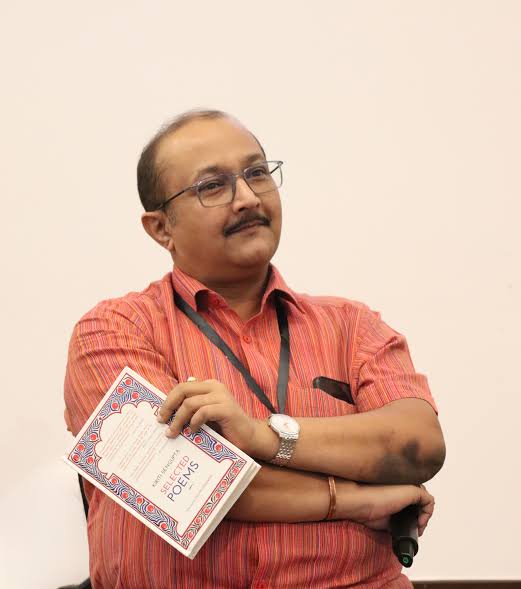
In a deeply reflective interview, poet Hindol Bhattacharjee unpacks the complex socio-political realities hiding behind the polished narrative of ‘Viksit Bangla’. He warns that while corporate aesthetics and the aggressive sanitization of public spaces might make the city appear more organized, they actively erase the marginalized voices, pavement booksellers, and informal spaces that define Kolkata’s true character. From questioning the selective silence of the modern Bengali intellectual class to exploring the enduring importance of the Little Magazine movement, Bhattacharjee examines a city that is increasingly suspended between memory and amnesia. Dive into this compelling dialogue on development, the fragility of pluralism, and why the defining theme of contemporary Kolkata is ‘erasure’. Before you read further… Get the best & trending news directly in your email for free. Subscribe → Q1. How do you decode the political vocabulary of “Viksit Bangla”? What realities is this narrative trying to hide? Every age invents its own language of power. In our time, words like “development,” “growth,” “transformation,” and now “Viksit Bangla” function almost like magical incantations. They ask us to look upward at flyovers, illuminated riverfronts, investment summits and smart-city dreams, while discouraging us from looking sideways at unemployment, precarious labour, shrinking democratic spaces, agrarian distress, environmental degradation, and the growing distance between rulers and citizens. As a poet, I am suspicious of every slogan that arrives fully polished. Human reality is rarely polished. It is contradictory, wounded, unfinished. “Viksit Bangla” may contain genuine aspirations, but it also risks becoming a theatrical backdrop behind which inconvenient questions are hidden. Development cannot be measured only in concrete and capital. A society is developed when its weakest citizens possess dignity, security, healthcare, education, and the ability to speak without fear. Otherwise, development becomes merely an aesthetic project imposed upon inequality. Q2. Kolkata is aggressively sanitizing its public spaces and evicting hawkers. How does a poet document a city that is erasing its own margins? A poet must become an archivist of disappearance. The history of Kolkata cannot be written only through government reports or architectural plans. It is written in tea stalls, pavement bookshops, hawkers’ cries, workers returning home at dusk, old men arguing politics beside a tram line, women bargaining in local markets. These seemingly insignificant details constitute the emotional geography of the city. When public spaces are sanitized, what is often being removed is not disorder but human presence. The hawker is not merely an economic category; he is a participant in the city’s cultural life. The pavement bookseller is not merely an encroacher; he is part of the intellectual ecosystem of Kolkata. Poetry begins where official documentation ends. If the city erases its margins, the poet’s responsibility is to remember them. Every demolished stall, every displaced family, every vanished conversation becomes a line in an unwritten poem. Q3. Bengal has a rich history of intellectual dissent. Yet, amid midnight evictions and top-down mandates, has the Bengali intellectual class compromised? Partially, yes. Every generation likes to believe it would have stood beside truth in difficult times. History suggests otherwise. Power has always possessed the ability to seduce, intimidate, reward, and isolate. Today’s intellectual landscape is no exception. What concerns me is not disagreement. Disagreement is healthy. What concerns me is selective silence. When intellectuals criticize authoritarianism only when practiced by their opponents and remain silent when it is exercised by those they support, they cease to function as intellectuals and become political accessories. The great tradition of Bengali dissent—from reformers, revolutionaries, writers, artists and journalists—was built upon a willingness to speak uncomfortable truths irrespective of who occupied power. That tradition survives, but it feels increasingly fragile. We need fewer courtiers and more witnesses. Q4. Is contemporary Bengali literature capturing the anxiety of this political transition, or has it retreated into safe, apolitical nostalgia? Both currents exist simultaneously. Some of the finest contemporary writing is engaging with displacement, communal tension, unemployment, migration, ecological anxiety, loneliness, and the subtle violence of neoliberal life. Yet there is also a noticeable retreat into nostalgia, private melancholy, and carefully depoliticized narratives. I do not believe literature must function as propaganda. Literature loses its soul when it becomes a political pamphlet. But literature also loses its relevance when it refuses to confront its historical moment. The task of literature is not to provide answers. Its task is to preserve difficult questions. If our literature ceases to ask uncomfortable questions about power, inequality, memory, and justice, it risks becoming merely decorative. Q5. What happens to the cultural soul of Kolkata when its informal spaces and raw human elements are replaced by a sanitized, corporate aesthetic? A city can survive the loss of buildings. It cannot survive the loss of character. Kolkata has never been beautiful in the conventional sense. Its beauty emerged from contradiction. It was chaotic, argumentative, crowded, emotional, and imperfect. It possessed what urban planners often dislike and what artists often cherish—unpredictability. Corporate aesthetics seek efficiency, cleanliness, control, and visual uniformity. There is nothing inherently wrong with these qualities. The danger emerges when they become the only values that matter. When every corner begins to resemble a commercial brochure, cities lose their local memory. When every public space is designed primarily for consumption rather than interaction, citizens slowly become customers. A city without informal spaces may become more manageable, but it also becomes less alive. Q6. Bengal has long prided itself on a syncretic, pluralistic culture. Is this shared cultural identity surviving today’s political polarization, or is it actively fracturing? It survives, but not automatically. Pluralism is not a monument that once built remains forever intact. It is a daily practice. Bengal’s cultural identity emerged from centuries of interaction among diverse communities, languages, faiths, and social traditions. That inheritance remains powerful. However, political polarization thrives by simplifying complex identities. It asks people to choose permanent camps and permanent enemies. Such politics gradually erodes trust, empathy, and shared cultural spaces. What gives me hope is that ordinary people often remain wiser than political narratives. Neighbours continue helping neighbours.
Between Memory and Amnesia: A Conversation with Hindol Bhattacharjee Read Post »
1. Does your research on folk traditions reflect the current struggles of oppressed communities in JangalMahal? My research on folk traditions is not limited to preserving cultural heritage; it seeks to uncover the histories of struggle, marginalization, oppression, and resistance embedded within these traditions. Through the study of folk songs, oral narratives, rituals, and community practices of the Indigenous (Adivasi), Dalit, and other marginalized communities of JangalMahal, I have found that many of their contemporary challenges are deeply rooted in long-standing social and economic realities. Genres such as kandna Geet (songs of lament), Bhadu, Tusu, and Jhumur repeatedly articulate themes of landlessness, poverty, labor exploitation, gender inequality, and social exclusion. These traditions are far more than forms of entertainment; they function as living archives of collective experience and memory. In particular, kandna Geet reveals the often-silenced realities of women’s lives, including domestic violence, emotional abuse, forced early marriage, and the hardships associated with child marriage. Such songs provide valuable insight into the everyday struggles faced by women in marginalized communities. Even today, the people of JangalMahal continue to fight for livelihood security, access to education and healthcare, rights over forest resources, and cultural recognition. The echoes of these ongoing struggles can be clearly heard in their folk traditions. The songs and narratives preserve not only memories of past injustices but also expressions of resilience and aspirations for a more equitable future. A significant focus of my research is the voices of women. kandna Geet, songs born out of sorrow, grief, and hardship, offer a unique space for emotional and social expression. In a social environment where men are often discouraged from openly expressing vulnerability, women transform their pain into song, using music as a means of articulating suffering and easing emotional burdens. These songs frequently contain subtle yet powerful forms of protest, reflecting demands for dignity, autonomy, and social justice. Notably, they are largely secular in character, transcending religious boundaries and speaking to universal human experiences of suffering and resistance. For this reason, I do not view folk traditions merely as remnants of the past. Rather, I see them as dynamic and living testimonies to contemporary social realities. They reveal how historical inequalities continue to shape present conditions while simultaneously documenting the ways marginalized communities resist, negotiate, and survive. My research therefore reflects the ongoing struggles of oppressed communities in JangalMahal because their histories, pain, aspirations, and resistance are deeply embedded within their cultural expressions. Folk traditions remind us that the voices of marginalized people are never entirely silenced; they endure across generations—through songs, stories, memories, and collective acts of cultural survival. Before you read further… Get the best & trending news directly in your email for free. Subscribe → 2. Where does the “Viksit Bangla” narrative disconnect from the everyday reality of the people in JangalMahal? The idea of “Viksit Bangla” (Developed Bengal) presents a vision of progress, growth, and modernization. However, for many people in JangalMahal, there remains a significant gap between this narrative of development and their everyday lived realities. This disconnect is most visible in the contrast between official development indicators and the actual experiences of local communities. While government reports often highlight improvements in infrastructure, electrification, road connectivity, and welfare schemes, many residents of JangalMahal continue to face persistent challenges such as limited employment opportunities, insecure agricultural livelihoods, restricted access to forest resources, inadequate healthcare facilities, and limited opportunities for higher education. For a large section of the population, development has yet to translate into lasting economic security, social dignity, and an improved quality of life. The gap becomes even more pronounced for Adivasi and other marginalized communities. Development is frequently framed through economic and administrative benchmarks, while local cultures, languages, knowledge systems, and ways of life receive comparatively less attention. As a result, development can sometimes appear as a top-down process rather than one shaped by the aspirations and participation of the people it is intended to benefit. Local voices, cultural identities, and community priorities are not always adequately reflected in policy frameworks. For many people in JangalMahal, meaningful development is not measured solely by physical infrastructure. It is closely tied to secure land and forest rights, dignified livelihoods, access to quality healthcare and education in mother tongues, cultural recognition, and meaningful participation in decision-making processes. These dimensions are essential to creating a development model that is both inclusive and sustainable. As a researcher of folk culture, I have observed that traditions such as kandnageet, karam, Bhadu, Tusu, Jhumur, and other folk forms continue to express people’s aspirations, anxieties, and experiences of exclusion. The themes that emerge from these songs—economic hardship, social inequality, displacement, gendered struggles, and the desire for dignity—remain strikingly relevant today. Folk traditions therefore offer an important lens through which to understand the realities that often remain invisible within official narratives of progress. In this sense, the promise of “Viksit Bangla” can only be fully realized when development is assessed not merely through statistics and infrastructure projects, but also through the lived experiences, voices, and well-being of the people of JangalMahal. True development is not only about economic growth; it is equally about social justice, cultural dignity, democratic participation, and the ability of communities to shape their own futures. 3.What specific type of development do marginalized women in this region actually need right now? For marginalized women in JangalMahal and similar peripheral regions, development cannot be reduced to economic assistance alone or measured solely through government schemes and infrastructure projects. What is needed is a holistic, rights-based, and community-centered model of development that addresses the realities of their everyday lives. First and foremost, educational empowerment remains crucial. Many girls are still compelled to discontinue their education after secondary school due to poverty, early marriage, inadequate educational facilities, or social pressures. Expanding access to quality education, particularly mother-tongue-based learning, higher education opportunities, and skill-development programs, would enable women to become more self-reliant and active participants in social and economic life. Equally important is the right to health and well-being. Maternal healthcare,
Voices from JangalMahal: An Interview with Baby Shaw Read Post »