The Eternal Mahanayak: Uttam Kumar
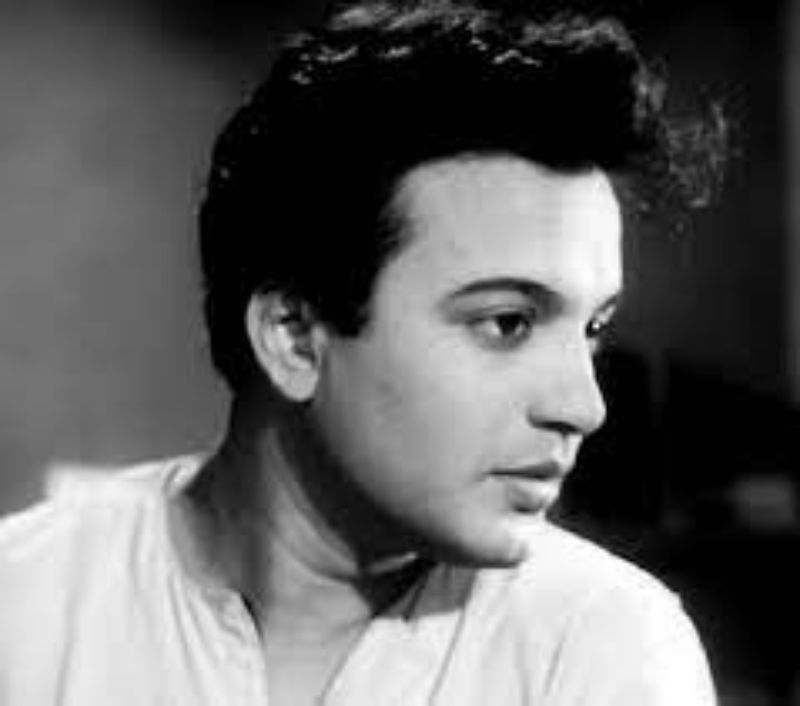
Tapan Dey On September 3, 1926, a boy named Arun Kumar Chatterjee was born in his maternal home. This house was located at 51 Ahiritola Street in North Kolkata. His father, Satkari Chattopadhyay, worked as a film projectionist at Metro Cinema. This job gave the young boy an early window into the magical world of movies. His maternal grandfather lovingly gave him the name Uttam. However, his mother did not particularly like this name and preferred to call him Arun. He grew up in an ordinary middle-class family. He read widely and loved Rabindrasangeet as much as he loved Hollywood cinema. He also cared deeply about sports, food, clothes, conversation, and the vibrant social life of Calcutta.He was a highly active and athletic young man. He swam competitively and became a swimming champion at the Bhowanipur Swimming Association for three consecutive years. He was also a skilled footballer who played in the right-back position. He remained a passionate, lifelong supporter of the Mohun Bagan football club. He even practiced wrestling to build his physical confidence. In 1936, he and his friends founded an amateur theatre group called the Lunar Club. Their very first stage production was Rabindranath Tagore’s famous play Mukut.After completing his graduation, he had to earn a living. He initially worked as a clerk at the Kolkata Court. He later joined the Calcutta Port Trust as a clerk in the cash department. His monthly salary there was exactly 275 rupees. He spent his days surrounded by paperwork while dreaming of a completely different life. He also gave music lessons to earn extra cash for his family. He never let go of his deep passion for acting. He continued exploring his craft through amateur theatre on the side.He finally made his film debut in 1948 with Nitin Bose’s movie Drishtidan. His cinematic journey was incredibly difficult at first. His debut and his next six to nine releases failed miserably at the box office. The film industry cruelly gave him the mocking nickname Flop Master General. He faced constant rejection and almost quit his acting dream. However, the spiritual master of his maternal family, Sripurna Sanyasi, saw his beautiful smile. The master predicted that the entire country would one day recognize him simply by the name Uttam.That beautiful prediction finally started to come true in 1952. He found his first real breakthrough in Nirmal Dey’s film Basu Paribar. This movie also starred Sabitri Chatterjee, Supriya Devi, and Bhanu Banerjee. The very next year, in 1953, a single year changed his entire life. He starred opposite the legendary Suchitra Sen in the beloved comedy Sharey Chuattar. The film became a massive superhit. Audiences instantly fell in love with their magical on-screen pairing. They reached the absolute height of their success together with the 1954 blockbuster Agni Pariksha. Every director wanted to cast them in their movies. They quickly became one of the most successful screen couples in the entire history of Bengali cinema. Uttam deeply respected Suchitra Sen’s immense talent. He gladly agreed to have her name appear before his own on film credits and publicity posters.Uttam Kumar was not just a natural talent who got lucky in life. He manufactured himself into a brilliant actor through pure observation and strict discipline. He carefully studied international stars like Gregory Peck, Gary Cooper, Clark Gable, Laurence Olivier, and Marlon Brando. He did not simply copy their glamour. Instead, he absorbed their psychological truth, their use of silence, and their subtle restraint. He became a highly technical actor with a very high emotional quotient. He knew exactly how to use his hands, his posture, his walk, and his famous smile. He understood the rotational angle of his neck and always presented the perfect profile for the cinematographer. He was an incredibly observant man who adapted to every role completely. He remained wonderfully free of any repetitive signature mannerisms.He acted in around 250 films between 1948 and 1981. His profound influence ushered in the golden age of Bengali cinema. He became the ultimate romantic hero of everyday middle-class Bengali life. He redefined masculinity by being a hero who was flawed, who listened to women, and who was not afraid to cry on screen. However, he refused to be trapped in just romantic roles. He pushed his boundaries constantly to show his remarkable range. He played a romantic lead in massive hits like Harano Sur, Sagarika, Shaap Mochan, Sabaar Uparey, Pathey Holo Deri, and Deya Neya. He made audiences fall completely in love with his character Krishnendu in Saptapadi. He also excelled in great comedies like Bhrantibilash, Mouchak, Ogo Bodhu Shundori, and Dhanyi Meye. In Dhanyi Meye, he played a hilarious football fanatic.He bravely took on morally complex and highly challenging characters. In 1959, he played a serious judge in Prabhat Mukherjee’s Bicharak. He played a despicable villain named Bhavesh Banerjee in Bagh Bondi Khela. He fascinated audiences as the morally ambiguous, sharp-witted cop Tinkori Haldar in Thana Theke Aschhi. He made people cry as Ganada in Jadubansha. He played an emotionally wounded man trapped in a failing marriage in Jatugriha. He portrayed the lonely and vulnerable businessman Ananga Dutta in Nishipadma. He was completely believable as a doctor in Agnishwar. He delivered unforgettable performances in Saheb Bibi Golaam, Chowringhee, Marutirtha Hinglaj, Shesh Anko, Ekhane Pinjar, Nagar Darpane, and Chhadmabeshi.Many Bengali children in the 1980s and 1990s grew up in strict households where parents vetted their movies. Tapan Sinha’s Jhinder Bandi and Satyajit Ray’s Chiriakhana were rare exceptions allowed for children. In Chiriakhana, Uttam brilliantly played the famous detective Byomkesh Bakshi. Many fans truly discovered his genius later in life through VHS tapes of his old films. Watching films like Agnishwar, Bagh Bondi Khela, and Nayak became a beautiful discovery. For some, watching Nayak alongside Ray’s other films like Seemabaddha and Agantuk became an annual cinematic ritual.His most celebrated collaboration was indeed with Satyajit Ray in the 1966 masterpiece Nayak. Ray wrote this film specifically with Uttam Kumar in mind. Ray confessed that he
The Eternal Mahanayak: Uttam Kumar Read Post »