From Viral Satire to Electoral Pressure…What is the next
– Dr. Mahamudul Hasan Gayen
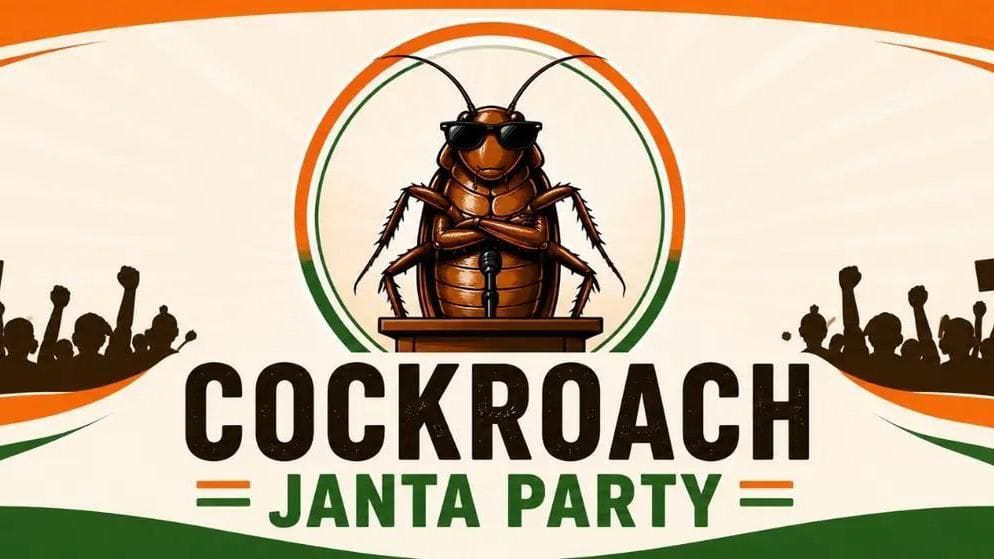
In May 2026, something very unusual took place in Indian politics. A Supreme Court judge made a comment during a hearing. He compared some young people who do not have jobs to “cockroaches” and “parasites.” These words hurt the feelings of many young Indians. They felt insulted and angry. The very next day, a young man named Abhijeet Dipke used this anger in a smart way. He turned the pain into humour and started the Cockroach Janta Party, which is also called CJP. At first, it was just a small joke on social media. But soon it grew into a very big online movement. In less than two weeks, the party got more than 20 million followers on Instagram. This number is bigger than what many large political parties have. Now, people across the country are asking a serious question. Can this funny “cockroach” idea really change the way youth politics works before the 2029 Lok Sabha elections?
Abhijeet Dipke is 30 years old. He is a political communications strategist. He studied in Boston in the United States and had earlier worked with the Aam Aadmi Party on their digital campaigns. He understood very well the deep frustration that many young Indians were feeling. So he decided to answer with wit and humour. On social media, he posted a simple question: “What if all the cockroaches come together?” He created a funny logo, a simple manifesto, and even a website for the new party. The Cockroach Janta Party described itself as the voice of the lazy and unemployed youth. To become a member, a person only needed to be young, frustrated with life, and good at complaining online. Thousands of young people joined very quickly by filling a simple Google form. They began sharing lots of memes, songs, and funny videos. The hashtag #MainBhiCockroach became extremely popular and spread all over the internet.
This fast growth did not come as a surprise to those who keep track of youth issues in India. Our country has millions of young men and women who complete their college education but still cannot find good jobs. The rate of unemployment among educated youth is quite high. There have also been serious problems like leaks in important exams such as NEET. Because of these issues, many students feel that the whole system is unfair to them. Political leaders often give long speeches about development and growth. However, a large number of young people do not see any real improvement in their day-to-day lives. They struggle with low-paying jobs, high competition, and lack of opportunities. The Cockroach Janta Party gave these young people an easy and enjoyable way to express their anger. Instead of remaining quiet and sad, they could now laugh together and protest at the same time. Some of them even wore cockroach costumes and took part in clean-up drives in their cities. This showed that they were not only funny but also serious about making a difference.
This type of youth movement is not something new in South Asia. In the last few years, young people in neighbouring countries have also used similar power to challenge their governments. In Sri Lanka, the 2022 Aragalaya movement was mainly led by angry young people. They were upset because of a big economic crisis, high levels of corruption, and poor governance. They used social media in a clever way to organise large protests. At one point, they even entered the President’s official house. Their strong efforts finally forced the powerful Rajapaksa family to leave power. This event proved that the power of youth can bring real and important political change when they stand united.
In Bangladesh, the 2024 July Uprising, which many people also call the Gen Z Revolution, began as a small student protest against unfair job quotas. But it quickly grew into a much larger fight against government repression and injustice. Young boys and girls used social media platforms very effectively to spread their message. Their determination was so strong that they forced Prime Minister Sheikh Hasina to step down from power. This became known as one of the first successful revolutions led by Gen Z in the world.
In Nepal, the 2025 Gen Z protests started because of a sudden social media ban and rising corruption. Young people came together on platforms like Instagram and Discord to organise themselves. Their continuous protests created so much pressure that the Prime Minister had to resign. After this success, many new youth-led parties were formed. These parties are now working hard to win seats in future elections and bring fresh changes to the country.
All these examples from Sri Lanka, Bangladesh, and Nepal teach us one clear lesson. When young people feel ignored, insulted, or left behind, they can quickly connect through the internet and create powerful pressure on governments. This gives hope that similar movements can work in India too.
To understand why the Cockroach Janta Party is important, we should look at some simple ideas from modern political science. Experts often talk about “digital insurgency” and the “attention economy.” In older times, political parties became strong by spending lots of money, building teams of local workers, and working for many years. But in today’s world, power also comes from catching people’s attention on their mobile phones. A single viral video or post can spread much faster than any long speech or public rally. When a movement connects with real problems like joblessness and unfair exams, it can grow at a very fast speed. We have seen this happen during the Arab Spring protests and also when the Aam Aadmi Party rose in 2012 by using public anger against corruption.
Another useful idea is “satire as resistance.” This means using humour to fight back. When people feel weak and powerless, a good joke can make them feel strong and brave again. By calling themselves cockroaches, the young Indians changed an insult into a symbol of pride. Everyone knows that cockroaches are very tough insects that can survive almost anything. This kind of fun and symbolic politics can slowly change the public mood, even if the party does not win any election seats. It forces big political parties to pay attention to youth problems. If leaders ignore these voices, they might see lower voter turnout or face split votes in elections.
In India, these ideas match the situation very well. India has more than 900 million voters. By the time of the 2029 elections, there will be a huge number of first-time young voters. Social media platforms reach these young people directly without any middleman. In the past, we have seen how public feelings changed election results. For example, the 2014 Modi wave and Anna Hazare’s anti-corruption movement showed the power of public anger. The Cockroach Janta Party is now testing if a fully digital and youth-led satire movement can create the same kind of effect.
The party grew so fast that it made many powerful people worried. The official website of the Cockroach Janta Party was suddenly blocked. Their accounts on X faced technical problems and restrictions. Abhijeet Dipke said he received death threats and lost control over several of his accounts. The government and its supporters started calling the movement a secret tool of the opposition parties. Some leaders from the opposition liked the idea and supported it. But others dismissed it as just noise coming from urban youth who do not understand real politics. Dipke has clearly stated that CJP is not a fully formed political party yet. It does not plan to fight the 2029 elections directly. Its main aim is to make all politicians more responsible and to change the national conversation around youth issues like jobs and education.
Even with these limitations, the impact of the movement is already quite clear and visible. Big mainstream parties have now started talking more seriously about creating jobs and fixing problems in the education system. The huge viral success even pushed the Supreme Court to respond to several related petitions. Young people who used to feel ignored and invisible now feel that someone is finally listening to them. This fresh energy can affect the 2029 Lok Sabha elections in different ways. Young voters may stop giving automatic support to any party. Instead, they might ask harder questions during election campaigns. The movement can also encourage opposition parties to form better partnerships with young voices. If the Cockroach Janta Party manages to create some local groups on the ground, it could support independent candidates or keep pressure on current Members of Parliament to solve the unemployment problem. Even if it does not win any seats, it can still act as a loud and active pressure group.
Of course, there are several big challenges in front of this movement. It is not easy to turn millions of online followers into real votes on election day. A large number of people joined only for fun and entertainment, not for serious long-term politics. In the past, many similar viral movements in India became quiet after a few months. To build a proper political party, one needs money, strong local leaders in every area, and official registration with the Election Commission. Abhijeet Dipke lives abroad, and some of his old videos have been used by critics to question his true intentions. If the movement remains only active on Instagram and does not move towards real offline action, its influence on the 2029 elections may stay limited.
Yet, we should not reject or dismiss the Cockroach Janta Party too easily. Indian politics has seen big changes many times in the past because of the power of angry and united youth. The student movements in the 1970s, the big anti-corruption wave of 2011, and the recent farmer protests all began with strong emotions and public feelings. Today’s young generation is more connected through the internet than any generation before them. They deeply care about important issues such as better jobs, fair examination systems, women’s safety, and cleaner politics. If the Cockroach Janta Party can keep its attention on these real problems and does not turn into just another account for trolling, it definitely has a good chance to reshape the entire political discussion in the country.
In the end, the Cockroach Janta Party is a wonderful example of the power of ordinary young voices in the digital age. It began as a simple joke but touched the deep pain and frustration of millions. Whether it grows into a major political force by 2029 or slowly becomes less active, it has already proved one very important thing. The youth of India will not stay silent anymore if they feel insulted or ignored. They are ready to fight back for their rights, and they are happy to do it with humour, memes, and a cockroach emoji. For the 2029 elections, the most important question is not whether this party will win many seats. The real question is whether the politicians will finally listen carefully to the millions of young voices who joined this movement. The “cockroaches” are watching everything. And in our great Indian democracy, this kind of attention from the youth has the power to change many things for the better.