Rural India’s Economy in the Last Decade: A Detailed Analysis
The Indian economy has grown massively over the last decade. National statistics show strong overall performance. The Ministry of Statistics and Programme Implementation (MoSPI) tracks this data carefully. They estimate a real Gross Domestic Product (GDP) growth of 7.7 percent for the financial year 2025-26. The total economic output of the country is expanding. However, a deep paradox exists within this growth story. The benefits of this rapid economic expansion do not reach everyone equally. A very large portion of the Indian population still lives in villages. They depend entirely on the rural economy. This rural economy has experienced severe turbulence between 2014 and 2026.
Before you read further…
Get the best & trending news directly in your email for free.
We see a clear and growing division between urban wealth and rural struggles. Government tax data reveals the rising wealth at the top. The number of individuals reporting an income of more than Rs 100 crore has quadrupled in just five years. There were 576 such extremely wealthy taxpayers in the 2025-26 assessment year. Yet, the rural areas tell a very different and difficult story. The rural economy consists mostly of farming, animal husbandry, local trade, and daily wage labour. Over the last ten years, this sector faced multiple massive shocks. It faced severe droughts in 2014 and 2015. It faced the unprecedented COVID-19 pandemic. It also faced global inflation and changing government policies. Researchers note that the rural economy is currently losing its structural momentum. The expected shift of workers from poor farms to modern factories did not happen. Instead, the last decade saw millions of people going back to their village farms. This article explores these massive economic shifts in detail. It uses official government reports, survey data, and academic researchers’ notes. It paints a comprehensive picture of rural India’s economic reality today.
The Return to Agriculture
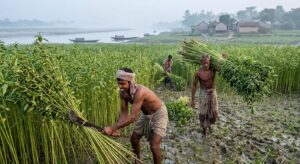
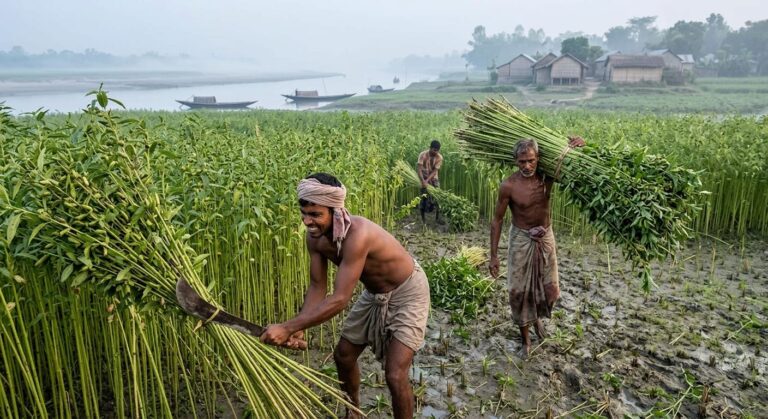
For many decades, economists expected fewer people to work in agriculture. As countries develop, workers naturally move to factories and modern services. India followed this exact path for some time. The National Sample Survey Office collects data through the Periodic Labour Force Survey (PLFS). According to the PLFS data, agricultural dependency was steadily falling. In the year 1993-94, about 64.6 percent of the country’s working population was engaged in agriculture. By 2011-12, this number dropped to 48.9 percent. Right before the COVID-19 pandemic, it fell even further. It reached 42.5 percent in 2018-19. This showed positive economic progress. People were finding better jobs in urban areas.
Then the pandemic hit and the trend completely reversed. The PLFS data shows agricultural dependency rose sharply to 46.5 percent in 2020-21. Even after the pandemic ended, the numbers remained high. In 2023-24, about 46.1 percent of the people were still employed in agriculture. The data specific to rural India shows an even stronger shift. In 2023-24, about 59.8 percent of the rural working population worked in agriculture.
The National Bank for Agriculture and Rural Development (NABARD) conducted a massive survey in 2021-22. This crucial government report confirms the backward shift. The NABARD survey shows the number of rural families relying on agriculture increased. It went from 48 percent in 2016-17 to 57 percent in 2021-22. This is a major structural reversal. The cities failed to create enough good jobs. The manufacturing sector could not absorb the growing youth workforce. Therefore, millions of people had to fall back on their small village farms. Agriculture became the ultimate safety net for the poor. This reverse shift puts extreme pressure on limited rural land and water resources.
Income Patterns and Household Earnings
The income levels in rural India reveal the daily struggles of the people. We must look at how much money families actually earn in a month. The NABARD survey of 2021-22 gives very clear data on this matter. It defines a farming family as one earning more than Rs 6,500 from agriculture. The average monthly income of all rural families combined is Rs 12,698. This is a very modest amount for a whole family to survive on. However, there is a clear difference based on occupation. Farming families earn a bit more. They make an average of Rs 13,661 per month. Non-farming rural families earn less. Their average monthly income is Rs 11,438. This was an increase from the previous survey. In 2016-17, farming families earned Rs 8,931. Non-farming families earned Rs 7,269 at that time.
We must understand exactly where this income comes from. For farming families, agriculture is the main source of money. It provides 33 percent of their total monthly income. Government or private services provide 23 percent. Daily wages give 16 percent. Other small businesses provide 15 percent. This shows that farmers do not just farm. They must work other side jobs to survive. For non-farming families, 57 percent of their income comes from jobs. Wages bring in another 26 percent.
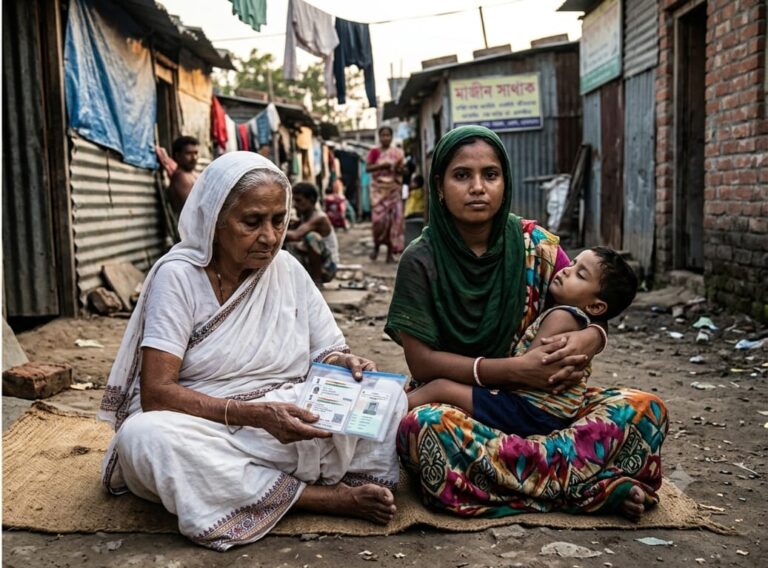
Land ownership matters more than anything else in the village economy. Families owning more than two hectares of land earn double the income of small farmers. Millions of rural families have very little land. Families with less than 0.01 hectares hardly earn anything from farming. Agriculture gives them only 2 percent of their total income. They survive purely on daily labour, minor jobs, and raising livestock. The data shows deep inequality inside the villages. A few big farmers make a decent living. The vast majority of rural people patch together a living from many small and uncertain sources.
The Wage Stagnation Problem
Wages are the most important indicator of economic health for the poor. Most poor rural people work as casual labourers. They work on farms or construction sites. The last decade has seen a major debate among researchers about rural wage growth. Researchers Arindam Das and Yoshifumi Usami wrote a detailed paper in the Review of Agrarian Studies. They studied wage trends from 2014-15 all the way to 2022-23. They used two different government data sources. One is the Wage Rates in Rural India (WRRI) data. The Ministry of Labour and Employment publishes this data monthly. The other is the PLFS data.
The researchers note a long and painful period of stagnation. The WRRI data shows that real wage rates barely grew. The annual growth rate was less than one percent for almost all occupations. This happened over nine long years. The researchers point out that wages grew nicely before 2014. From 2006 to 2014, rural wages grew by more than 6 percent every year. Then the growth simply stopped. Droughts in 2014 and 2015 caused an initial decline. Then steady inflation ate away any small increases in money wages.
Real wages mean the actual purchasing power of a worker. This purchasing power stayed entirely flat. For example, in the last nine years, real wages for skilled masons rose only from Rs 251.3 to Rs 264.7. General construction workers saw their wages move from Rs 181.2 to just Rs 186.5. This is a very tiny increase over almost a decade of hard work. However, the PLFS data shows a slightly different picture. It suggests a rapid rise in real wages right after the pandemic. The PLFS data claims male agricultural wages grew by 10 percent in some specific states. Researchers warn us to be careful here. The two government data sources contradict each other on the post-pandemic recovery. Most field studies and researchers’ notes support the WRRI data. The rural working class has faced a lost decade in terms of real wage growth.
Education and the Non-Farm Sector
The rural economy cannot survive on agriculture alone. The non-farm sector is extremely crucial. This sector includes small shops, transport, construction, and tiny factories. It provides an alternative to farming. However, the growth of this sector remains very weak. A major reason for this weakness is the lack of proper education and modern skills.
The Education Ministry shared a very important presentation at a recent national conference. The data they presented is deeply worrying. About 73 percent of the working-age people in India have only basic education or less. Around 26.6 percent have less than basic education. Another 47.7 percent only have basic education. This makes it nearly impossible for them to get good formal jobs. Only 4.8 percent of young people in the 15 to 29 age group have any formal skilling.
Because of this very low education level, rural workers are trapped. They cannot join the modern, high-paying services sector. The NITI Aayog notes that the services sector desperately needs better skills. India’s overall labour productivity is very low. It is stuck at 10.68 dollars per hour worked. Between 2017-18 and 2023-24, about 15 crore new workers joined the workforce. Many of them live in rural areas. Around 40 percent of these new workers are self-employed. Another 37.3 percent work as unpaid helpers in family enterprises. This means they are not getting formal jobs with fixed salaries. They are selling vegetables, running small tea stalls, or helping in the family fields.
The NITI Aayog report strongly advises the government to diversify rural employment. It suggests promoting rural healthcare, digital services, and local tourism. Until rural schools improve dramatically, the non-farm sector will remain mostly informal and very low-paying.
Government Schemes and Their Economic Impact
The government runs several large welfare schemes to support the rural economy. These schemes act as a critical lifeline for the poor. The most important one is the Mahatma Gandhi National Rural Employment Guarantee Act (MGNREGA). This law guarantees 100 days of wage employment to rural households willing to do manual work. A research paper published in the International Journal of Advances in Social Sciences studied its actual impact on the ground.
The researchers note that MGNREGA has created important social and physical assets. It helps build village ponds, small rural roads, and water conservation structures. The scheme definitely increases employment for landless agricultural labourers. One field study showed a 34.52 percent increase in employment days for its beneficiaries. Average annual incomes increased by about 62.5 percent for participating households in that study area. However, researchers clearly state a strong warning. They note that MGNREGA is only a temporary solution to extreme poverty. It does not bring a significant, permanent change to the overall quality of life.
Another massive government scheme is the Pradhan Mantri Kisan Samman Nidhi (PM-KISAN). This scheme gives Rs 6,000 annually to land-owning farmers. The money goes directly into their bank accounts. A recent academic research paper studied PM-KISAN in the state of Chhattisgarh. The researchers found that the cash amount is relatively small. However, it plays a vital and positive role. It stabilizes farm income during tough months. It greatly improves cash liquidity in the villages. It reduces the urgent need to borrow money from local moneylenders at very high interest rates. The scheme pushes thousands of crores of rupees into the rural economy. This directly boosts local market consumption. People use the cash to buy seeds, fertilizers, or simple household items. But researchers also note its severe limitations. It completely excludes tenant farmers who do not own the land they plow. It acts mostly as a social protection tool rather than a true growth engine.
The Pandemic Shock and Rural Resilience
The last decade will always be remembered for the terrible COVID-19 pandemic. It caused a massive and sudden shock to the Indian economy. The impact on rural India was highly unique and profound. When the government announced a sudden national lockdown, millions of urban jobs vanished overnight. Factories closed down completely. Construction sites stopped all work. Millions of domestic workers were fired.
This triggered a historic and tragic reverse migration. Millions of desperate migrants walked hundreds of kilometers back to their native villages. The big cities completely failed to protect them from the crisis of survival. The rural economy suddenly had to absorb a massive influx of returning people. Agriculture played a heroic role during this dark time. It became the ultimate shock absorber for the entire nation. While the urban economy crashed, agricultural production mostly continued. The villages provided basic food and shelter to the returning migrants.
However, this rural resilience came at a huge and painful cost. The rural infrastructure was stretched to its absolute breaking point. The fragile healthcare system in villages struggled to cope with the returning population and the deadly virus. The sudden increase in available rural labour drove down local wages. More people competing for the exact same amount of farm work meant less money for everyone. The WRRI data shows that wage rates fell even faster for female agricultural workers during the pandemic months. Non-agricultural male workers saw their wages stagnate completely.
Even years after the pandemic, the deep economic scars remain. Many workers chose not to return to the hostile cities. They accepted lower incomes in the villages for the sake of safety and family support. This created hidden underemployment. People are physically working on farms, but their extra labour does not add much to the total crop production. They are simply sharing the existing poverty among more people.
Women in the Rural Economy
Women truly form the backbone of the rural economy. Their hard work is often completely invisible in official statistics. They work endlessly in the fields, take care of livestock, and manage entire households. Over the last decade, female labour force participation has seen very complex trends. For many years, women were slowly dropping out of the rural workforce. They were focusing more on education or staying home as overall family incomes rose slightly.
But recent economic distress forced many rural women back to work. They mostly returned as unpaid family helpers or very low-paid farm labourers. The WRRI data clearly shows the extreme vulnerability of women in the workforce. During crises like the pandemic, female wages fall much faster than male wages. The daily wage gap between men and women remains very wide and unfair. Male general agricultural labourers earn significantly more than female labourers for doing the exact same manual work.
However, there are some positive changes happening slowly. The PLFS data noted that post-pandemic recovery saw some sharp wage increases for female agricultural workers in specific states. Another major bright spot is the rapid growth of the Self-Help Group (SHG) movement. Millions of rural women have actively joined these local financial groups. Researchers note that SHG initiatives have deeply significant implications for the economy. They successfully enhance women’s economic status. They help women save small amounts of money and get small bank loans. This allows them to start small, independent businesses like tailoring, poultry rearing, or food processing.
More importantly, these groups lead to greater participation of women in local decision-making. Women gain immense confidence. They start speaking up in household financial matters and village councils. Empowering rural women is absolutely essential for any future growth. A rural economy cannot grow if half of its population is left behind in low-paid, invisible, and unappreciated work.
The Impact of Climate Change on Livelihoods
The rural economy is deeply and permanently tied to nature. The weather directly determines the fate of millions of farmers every single year. Over the last decade, climate change has become a severe and immediate economic threat. Unpredictable monsoons have become the new normal. Some regions face severe and prolonged droughts while others face devastating flash floods. These extreme weather events destroy standing crops instantly. They kill valuable livestock and damage vital village infrastructure.
The financial impact on rural households is absolutely massive. When a crop fails, a farmer loses the entire investment made in expensive seeds and fertilizers. This pushes them instantly into deep debt. They often borrow money from informal local lenders at very high and abusive interest rates. Climate change also deeply affects landless agricultural workers. Extreme heat waves make it highly dangerous to work in open fields during the day. This reduces the total number of working days available to a daily wage earner. It directly lowers their monthly income and food security.
The government provides crop insurance schemes to mitigate these terrible risks. However, the financial payouts are often delayed or insufficient. The rural economy massively relies on agriculture which is inherently prone to these natural disasters. Academic researchers warn that climate impacts lead directly to distress migration. Young people leave their native villages because they see absolutely no safe future in farming. They move to crowded city slums in search of any available manual work. Adapting to climate change is now a major economic challenge for rural India. Without completely new climate-resilient farming methods, the rural economy cannot stabilize or grow.
Infrastructure Growth and Connectivity
Physical infrastructure has seen significant improvement in the last decade. The government has focused heavily and consistently on rural connectivity. Massive programs for building rural roads have successfully reached many remote villages. Better roads change the local economy in many highly positive ways. Farmers can transport their fresh vegetables and milk to nearby towns much faster. This drastically reduces the spoilage of perishable agricultural goods. It allows farmers to negotiate better prices for their hard-earned produce.
Electricity is another critical economic factor. The aggressive push for rural electrification has brought power lines to millions of homes. This directly extends the working hours for small rural businesses. A village tailor or a small shop owner can work late into the evening. Electricity is also totally crucial for modern irrigation. Farmers can run water pumps to irrigate their dry fields during long dry spells.
Access to clean drinking water and basic sanitation has also been a major policy focus. Building toilets and providing piped water heavily improves public health. It reduces the vast amount of money poor families spend on treating water-borne diseases. A healthier workforce is naturally a more productive workforce.
Furthermore, digital infrastructure has finally reached the deepest villages. Cheap mobile data and smartphones have connected rural youth to the wider national economy. Digital payment systems are now extremely common in tiny village shops. This digital connectivity helps immensely in sending government benefit transfers directly to the poor without corruption. While these infrastructure improvements are very impressive, they are only the foundation. They have not yet translated into large-scale industrial or corporate jobs in the villages. The physical assets are ready, but the human capital remains severely underutilized.
Structural Transformation and Economic Inequality
We must always look at the rural economy in the context of the whole country. India is experiencing high overall economic growth. The national GDP is growing fast. The urban stock markets are breaking records constantly. The number of very rich people is increasing rapidly. The government data shows a massive jump in high-income earners. There are now 576 individuals officially reporting an income of more than Rs 100 crore. This specific number has quadrupled in just five short years. This massive wealth is mostly concentrated in a few large urban centres.
Meanwhile, the rural economy faces deep, unresolved structural problems. It massively relies on traditional agriculture. More than half the population depends on it for sheer survival. Agriculture remains at the absolute mercy of unpredictable monsoons. It is highly prone to droughts and floods every year. Climate change is making this vulnerability much worse. The changing weather patterns destroy crops and sharply reduce yields. This leads directly to low and erratic incomes for farmers and workers.
We see a clear and painful divergence. The urban economy has totally overtaken the rural economy in terms of total economic output. But urban employment is less than half of rural employment. This means a very small number of urban workers produce most of the nation’s wealth. A massive number of rural workers produce very little wealth in comparison. This creates severe and dangerous income inequality.
The government claims it is taking strong measures to reduce this glaring inequality. The minister of state for finance stated that the government is spending much more on food, health, education, and housing. Despite these sincere welfare efforts, the structural transformation has stalled completely. People are permanently stuck in low-productivity farm work instead of moving to high-productivity factory work.
Future Policy Directions and Conclusion
The last decade of rural India’s economy shows a complex mix of stagnation and basic survival. The official data is very clear. Agriculture remains the dominant economic force. Real wages have barely moved for millions of casual workers. Basic education levels remain far too low to support modern industrial or tech jobs. The government schemes provide a necessary safety net, but they do not create long-term wealth.
Looking ahead, India needs bold and immediate policy changes. The NITI Aayog provides very clear recommendations for the future. We must actively develop new services clusters around mid-sized cities. This will heavily reduce the pressure on mega-cities and keep jobs closer to rural areas. We must properly integrate skilling and entrepreneurship programs specifically targeted at rural women. The government must focus heavily on creating climate-resilient green services in rural regions.
More money needs to go directly into agricultural research. Farmers desperately need better seeds and technology to fight severe climate change. Infrastructure development must continue. Better roads, huge cold storage chains, and continuous electricity can totally transform rural businesses. We also need to focus heavily on improving primary education and public health. A healthy and educated rural youth population can drive the next major wave of national economic growth.
Rural development holds paramount significance for the overall stability of the entire nation. Without lifting the rural masses completely out of poverty, India cannot achieve its dream of becoming a developed nation. The rural economy must transition from just surviving frequent crises to generating real, sustainable wealth. This absolutely requires a long-term vision, massive financial investments in human capital, and smart policies that directly target the poorest farmers and landless labourers.
We welcome your comments at info@gmail.com.
Author