Why was India partitioned? Even after almost eight decades of independence, this question repeatedly haunts the mind. Could Partition not have been avoided? If India, Pakistan, and Bangladesh had stayed together, could this land have become a mighty global power? What was the real benefit of Partition? And how many people lost their lives! We know that nearly two million people died in the Partition riots, and twenty million people lost their homes. If India had not been partitioned, would the mass killings of millions during the 1971 Bangladesh Liberation War still have happened? These questions will continue to be debated in the future. Various opinions will emerge.
Before you read further…
Get the best & trending news directly in your email for free.
When Lord Curzon partitioned Bengal in 1905, Hindu nationalists and some Muslims opposed it. Bengalis took to the streets of Kolkata to protest the British ‘Divide and Rule’ policy. But 42 years later, those same Bengalis tried their utmost to divide Bengal. This time, there was bloodshed and murder on the streets. World history witnessed a strange contradiction on the eve of independence. Was this merely communalism and a desire for dominance? Or were there smaller or larger vested interests involved? Joya Chatterji notes in her book Bengal Divided: Hindu Communalism and Partition: “Just before the second partition of Bengal was confirmed, an organized movement took place. Its goal was to divide the province based on religion. The leaders of this movement came from the exact same class of Bengali society that had dominated nationalist politics since the first partition of Bengal. They were known as the so-called Bhadralok or respectable people.”
During this tragic, fragile time, efforts were also made to form an undivided, independent, and sovereign Bengal. This initiative lasted from January to June 1947. The partners in this effort were Huseyn Shaheed Suhrawardy (the then Prime Minister of Bengal), Muslim League leader Abul Hashim (father of Bangladeshi leftist leader Badruddin Umar), and Netaji Subhas Chandra Bose’s elder brother, Sarat Chandra Bose. Against the backdrop of the Muslim League, Hindu Mahasabha, and Congress, their proposal sparked widespread discussion. But by then, the top leadership of the Congress and the Muslim League were intoxicated by the scent of power. It was no longer possible for them to agree to this proposal. Thus, an independent Bengal was never formed. Bengal was divided and handed over to Muhammad Ali Jinnah under the name ‘East Pakistan’. In reality, such a hostile environment had been created that Hindus and Muslims could not trust each other. Was the Two-Nation Theory the reason for this? Or was it merely the enjoyment of power through a communal division? After fighting together to stay united in 1905, why did this happen?
It would have been much more logical for the two Bengals to remain united. An independent Bangalah had flourished since the Sultanate period. We must certainly remember this. During that time, Bengal demonstrated its strength not only in coexistence and harmony but also in socio-economic development, architecture, and literature. Bengal’s condition began to decline after the fall of Siraj-ud-Daulah at Plassey. Modern historians argue that the Sultanate of Bengal cannot simply be labeled and isolated as “Muslim rule.” Do we call British rule a Christian rule? Then how logical is it to call the Muslims who stayed here—and who elevated Bengal’s architecture and culture to the world stage—merely Muslim rulers?
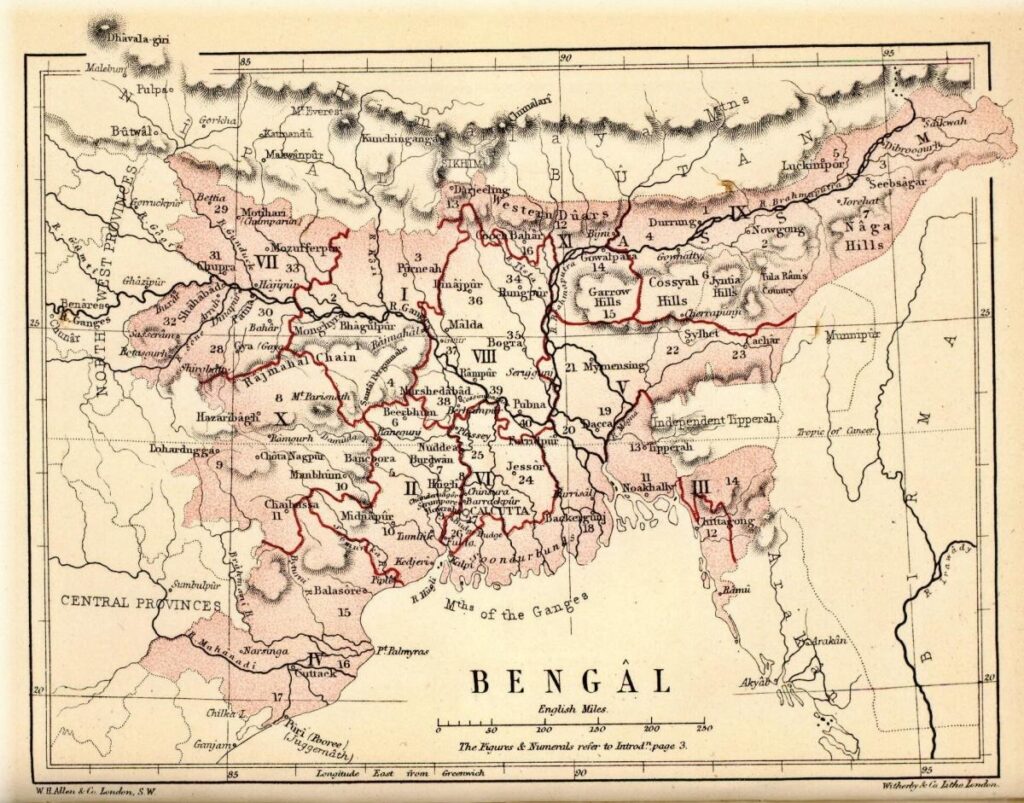
When today’s generation hears the word “Bengal” or “Bangalah,” a specific map floats before their eyes. Bengal was not like that in the past. Bangalah was a vast region washed by the Ganges and Padma rivers. During the reign of Lakshman Sen (1178–1204), the Turkish general Ikhtiyaruddin Muhammad bin Bakhtiyar Khalji attacked Lakshmanavati in Nadia. There was no battle during this campaign in 1204. The rule of the Sen kings ended in a bloodless takeover. Then came a historic day. It was a memorable era in the history of the independent Bangalah province. In 1342, Shamsuddin Ilyas Shah assassinated the ruler of Lakhnauti, Alauddin Ali Shah, and seized power. He established the Ilyas Shahi dynasty. This dynasty ruled Bengal for almost 70 years. Under his rule, the Bengal Sultanate expanded massively. Initially, Ilyas Shah was only the ruler of Lakhnauti. Sonargaon was ruled by the independent Sultan Fakhruddin Mubarak Shah. Satgaon was ruled by a governor loyal to Delhi. In 1346, Ilyas Shah attacked and captured Satgaon. Then, in 1352, he attacked Sonargaon and defeated Ikhtiyaruddin Ghazi Shah. As a result, Ilyas Shah became the ruler of all of Bengal. No one had been the Sultan of the entire Bengal before this. They were only rulers of specific regions. From the time of Ilyas Shah, this region came to be known as ‘Bangala’. He seemed to give this Bengal completeness. He was one of the greatest Sultans of Bengal. During the reign of Sikandar Shah of this dynasty, the Adina Mosque was built in Hazrat Pandua (1375 AD).
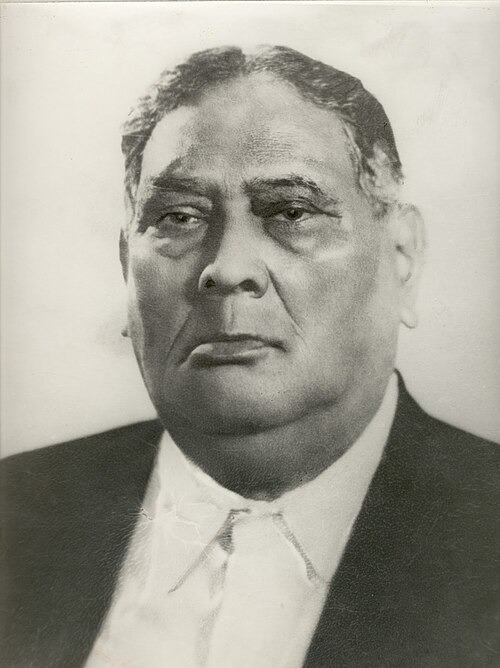
A. K. Fazlul Huq
Before the establishment of the Bengal Sultanate by Shah-i-Bangalah Shamsuddin Ilyas Shah in 1352, this vast land was not known as Bengal. Since ancient times, from the Maurya and Gupta eras, different regions of this vast land were known by different names—Vanga, Rarh, Samatata, Gauda (Malda-Murshidabad-Rajshahi region), Varendra, Harikela, etc. Shamsuddin Ilyas Shah was the great Sultan who first united the whole of Bengal and launched the vast Bengal empire.
In the truest sense, the new administrative system that began with the victory of Ikhtiyaruddin Muhammad bin Bakhtiyar Khalji gave birth to a unique and inseparable Bengali culture over the next few centuries. When the independent Sultans of Bengal broke away from the central rule of Delhi and accepted this country as their motherland, an unprecedented bridge of unity began to form between the Hindu and Muslim communities. This unity was not limited to the documents of the royal court. It spread to every brick of Bengal’s architecture and every line of its literature. The generous patronage of the Sultans and the active participation of local Hindus created a ‘Golden Age’ in the history of Bengal. Its resonance still exists in our social life today.
The architecture of the Sultanate period is the strongest and most visible proof of this communal harmony. When the Sultans of that time built mosques or Eidgahs, they did not blindly copy Middle Eastern styles. Instead, they relied on Bengal’s own climate, soil, and the skills of local artisans. When we look at the architecture of Gauda and Pandua today, we are still left in awe. The vastness and precision seen in the craftsmanship of the Adina Mosque or Chhota Sona Mosque is a wonderful blend of Hindu and Muslim architectural styles. The terracotta or burnt clay work seen on the walls of these buildings is essentially the tradition of Bengal’s ancient temple art. The Muslim Sultans did not reject this indigenous art; rather, they welcomed it. This blend of architecture was not limited to decoration. The touch of local Hindu architects was clear in the techniques used to build mosque domes or in the designs of the mihrabs. Take the Eklakhi Mausoleum, for example. The curved cornices used in its construction style are modeled on the familiar thatched roofs of Bengal. This ‘Dochala’ or ‘Chauchala’ style later influenced Mughal architecture as well. Even today, looking at the Sixty Dome Mosque in Bagerhat or the Qutub Shahi Mosque in Pandua shows what a wonderful fusion occurred between Islamic solemnity and Bengal’s eternal folk tradition. These structures were not just brick buildings. They were immortal monuments to the joint labor and intellect of Hindus and Muslims.
In the realm of literature, this unity gained a more vibrant and permanent form. Before the Sultanate period, Sanskrit dominated the royal courts of Bengal, and the language of the common people, Bengali, was despised. But the picture changed after the Sultans took the throne. They were the first to give Bengali royal status. Rulers like Sultan Ghiyasuddin Azam Shah or Alauddin Hussain Shah provided funds and encouragement to poets to translate Sanskrit Puranas and epics into Bengali. When Krittibas Ojha translated the Ramayana, he had Sultanate patronage behind him. Similarly, when Maladhar Basu wrote Sri Krishna Vijaya, the Sultan awarded him the title ‘Gunaraj Khan’. The respect Hindu poets received in the royal court clearly shows that the rulers of that time rose above religion and valued merit.
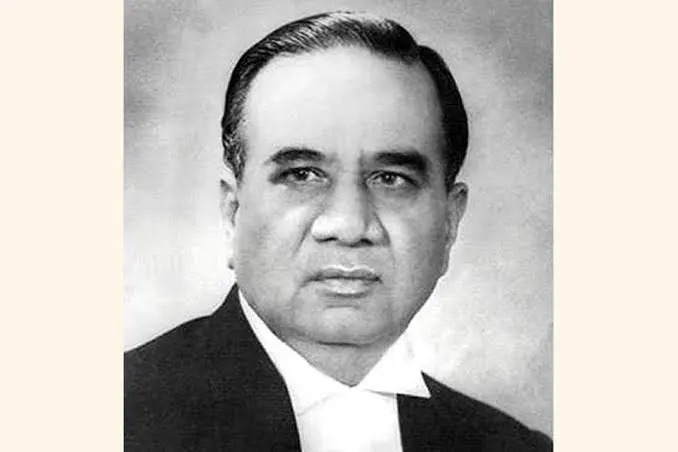
Huseyn Shaheed Suhrawardy
This literary revolution was not limited to Hindus alone. Muslim poets also started writing poetry based on the folk and religious tales of Bengal. Shah Muhammad Saghir’s Yusuf-Zulekha or Daulat Ujir Bahram Khan’s Laila-Majnu are invaluable treasures of Bengali literature. Even though Arab or Persian tales were narrated in these poems, their backdrop was the nature and society of Bengal. While describing the deserts of Arabia, the poets effortlessly used metaphors of Bengal’s rivers and green forests. This linguistic unity essentially created the backbone of the modern Bengali nation. Even today, when we read Boru Chandidas’s Shreekrishna Kirtan or Vijay Gupta’s Manasamangal, we realize that no religious wall ever stood in the way of enjoying this literature. The Sufi and Vaishnava movements were the biggest catalysts of this unity in social and religious fields. On one hand, Sufi saints like Shah Jalal or Khan Jahan Ali made a place in the hearts of common people with their humanist philosophy. On the other hand, the Vaishnava movement led by Sri Chaitanyadev dispelled the darkness of the caste system and sang the praises of love.
During the Sultanate period, it was a regular occurrence for Hindus to hold high administrative posts. Scholars like Rupa Goswami and Sanatana Goswami played important roles in state affairs during the Hussain Shahi dynasty. The appointment of Hindus to high posts like Dabir-i-Khas (personal secretary) proves that there was no trace of distrust in the minds of the Sultans. Because of this mutual trust and belief, the Sultanate period lasted a long time, and a stable social system was built in Bengal. Even today, when we turn the pages of that history, we see that no communal riot or religious division could pollute society at that time. Instead, people of one religion spontaneously participated in the festivals of another. However, that tradition of a united Bengal collapsed at one point. Later, we know about Siraj, the Nawab of Bengal, Bihar, and Odisha. We know the tragic story of the independent sun setting at Plassey. Even after that, the partition of Bengal occurred. Assam, Odisha, and Bihar were excluded. On June 20, 1947, through a vote in the legislative assembly, Bengalis received a fragmented West Bengal. That national identity was also divided into Hindu and Muslim identities. What could be more painful than this!
The bitterness between the Congress and the Muslim League kept growing after the 1937 elections. In 1940, the Lahore Resolution (or Pakistan Resolution) was introduced. Although the word ‘Pakistan’ was not in this Lahore Resolution, it was repeatedly called the Pakistan Resolution. From that time on, it was assumed that Pakistan was inevitable. The gap between the Hindu and Muslim communities gradually widened from this point. When the Second World War ended, discussions about India’s independence started anew. On August 16, 1946, a horrific communal riot broke out in Kolkata. On August 20, riots occurred in Dhaka. In September of that year, an interim government was formed. Initially, the Muslim League did not join this government. However, on October 12, the Muslim League decided to join. During this time, horrific riots also took place in Noakhali and Tripura districts. Riots also happened in Bihar. During this period in 1946, incidents of rioting just kept happening. Hindu-Muslim communal hatred was hidden behind this, but political patronage for partition was also at work. The bitter relationship between Congress and League ministers in the interim government caused functional difficulties. The British government realized that the partition of India was inevitable. On February 20, 1947, the British government announced that they would hand over power to responsible Indians very soon. After this announcement, the Muslim League took to the field to implement the Pakistan Resolution. Meanwhile, Congress and the Hindu Mahasabha kept trying to ensure that the Hindu-majority areas of Punjab and Bengal were included in India after the partition. At this time, communalism no longer stayed hidden. It came out completely naked. And exactly at this time, the plan to form an independent, sovereign, and undivided Bangladesh was drafted. The Prime Minister of Bengal, Suhrawardy, and Sarat Chandra Bose made this plan. Their proposal is known as the Suhrawardy-Bose plan. When communal riots broke out in Kolkata in August 1946, the demand for the partition of Bengal became strong everywhere. The Hindu Mahasabha, in particular, created a massive stir. Their main argument was that Hindus must be protected from the hands of Muslims. Congress did not build much public opinion against this. Therefore, freedom-loving nationalists tried to solve the problem through the partition of Bengal (as noted in Amalendu De’s Swadhin Bangabhumi Gathaner Parikalpana: Prayas O Parinati).
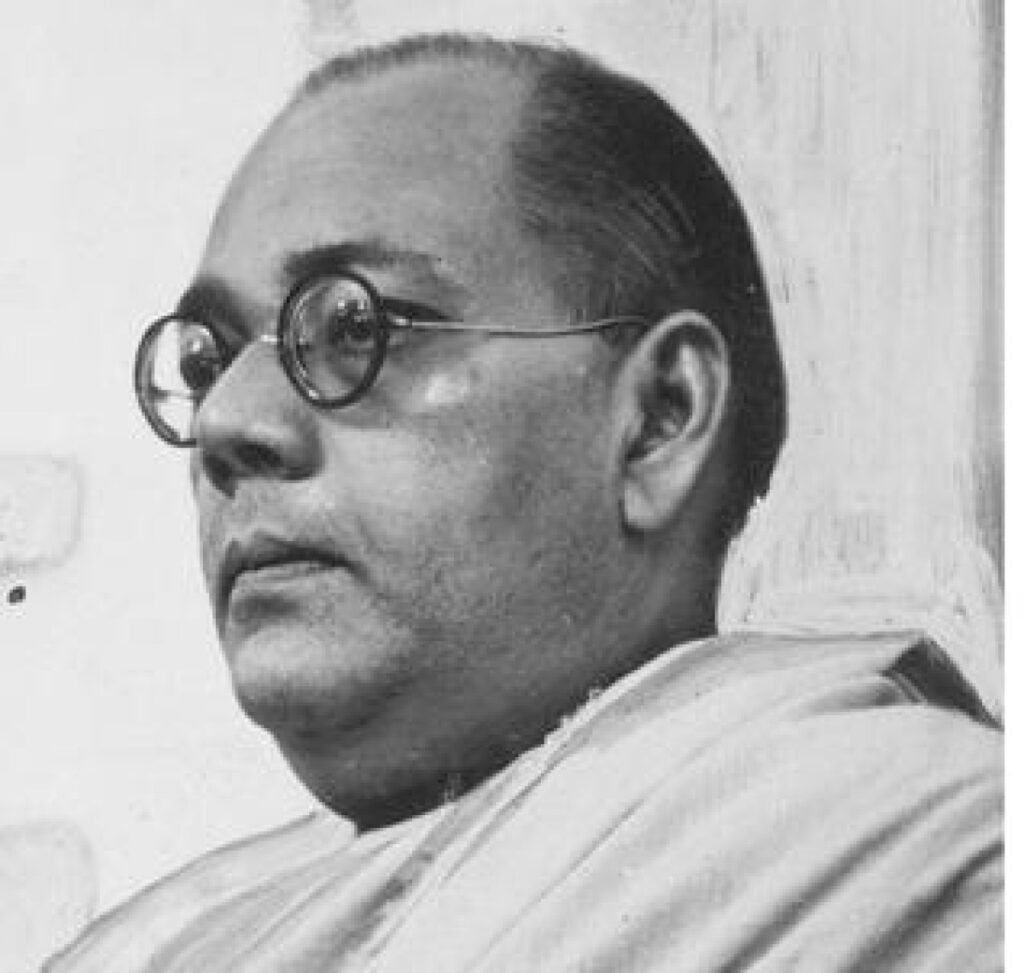
Sarat Chandra Bose
On April 5, 1947, at the Tarakeswar Hindu Mahasabha conference, Syama Prasad Mookerjee stated that the solution to this communal problem lay in partition. The blame for the 1947 partition of Bengal cannot be placed solely on the Hindu Mahasabha or Hindu nationalists. Because on April 4 of this same year in Kolkata, the working committee of the Bengal Provincial Congress Committee announced that they were accepting the proposal for the partition of Bengal. They too aligned with the Hindu Mahasabha. Syama Prasad even said that even if Pakistan was not formed, an independent province must be formed out of the Hindu-majority areas of Bengal. He absolutely wanted a Hindu province. In this way, nationalist Bhadralok kept raising the demand for the partition of Bengal everywhere. In contrast, the Prime Minister of Bengal, Huseyn Shaheed Suhrawardy, delivered a strong speech. He was the first among Bengal’s Muslim leaders to speak out powerfully against the demand for partition. In April 1947, he said: “I am in favor of forming a united and greater Bengal. If Bengal is divided, it will be equivalent to the suicide of all Bengalis.” He further added, “If Bengal remains united, then Bengal will become a great country. It will be the most prosperous in India. It will be able to provide its inhabitants with a higher standard of living. A great nation will be able to stand with its head held high. The demand for the division of Bengal is not the demand of the large number of Hindus in Bengal. The connection among Hindus in various regions of Bengal is so deep that they themselves will not agree to sever relations.” He also offered an assurance. If an undivided Bengal was formed, the culture, religion, and language of Hindus would not be harmed in any way. Most government employees were Hindus. The control of trade, commerce, industry, and various professions was also in the hands of Hindus. Therefore, he repeatedly stated that Hindus would not face any trouble if Bengal remained undivided. He considered the demand for dividing Bengal to be a lack of foresight.
Sarat Chandra Bose also spoke regarding the demand for a united Bengal. He said that a socialist republic could be formed on a linguistic basis. If a central union could be created with these socialist republics, then the current communal conflict in India could be resolved. To make this objective successful, he formed a committee in April 1947: the All Bengal Anti-Pakistan and Anti-Partition Committee. Abul Hashim’s role against the partition of Bengal was also significant. Despite being the Secretary of the Bengal Provincial Muslim League, he played a crucial role in this movement. He was actually a member of the progressive faction of the Muslim League. According to historian Amalendu De, he never wanted the Bengali Muslim’s connection with Bengali tradition and culture to be severed. Hashim said, “I am amazed to think what has happened to the Hindus of Bengal! From among them emerged figures like Surendranath Banerjee, Rabindranath Tagore, Ashutosh Mukherjee, Chittaranjan Das, and Subhas Chandra Bose. Today, Bengal stands at a point where one path leads to freedom and glory, while the other path indicates permanent slavery and humiliation. In a free state of Bengal, there will be no special provisions to separately reserve the interests of Hindus and Muslims in any field other than religious and social ones. The Muslim community will be guided by their Sharia and the Hindu community by their Shastras.” But their repeated assurances could not awaken the consciousness of the Bengali Hindu Bhadralok. At that time, the division simply seemed larger in everyone’s eyes amidst the tide of communalism. Mohandas Karamchand Gandhi also did not support a united Bengal in this case. Sarat Chandra Bose was a Congress leader. Suhrawardy and Abul Hashim were Muslim League leaders. Going against their party policies, they advocated for a united Bengal. Whether due to the adverse perception of Suhrawardy in the Hindu public mind, or the intense frenzy of communalism and partition, the struggle of these three men ultimately ended in failure. This subcontinent is still carrying the pain of the partition of India and Bengal. Instead of healing, the wound seems to have become more raw day by day. Even after separating East Bengal, it ultimately did not remain under Pakistan. Nearly twenty-five million Muslims now live in West Bengal. The desire of the so-called elites or Bhadralok for power-sharing and dominance might have been fulfilled. But Partition has written a permanent tale of sorrow on this soil, on the trees, and in the sky.
[About the Author:
Golam Rashid is a noted author, research scholar, and journalist. His writings primarily focus on the socio-political history of Bengal, the events surrounding the Partition of India, and the rich cultural heritage of the Bengali people. Through his historical analyses, he frequently explores the nuances of communal harmony, the evolution of Bengali identity, and the tragic consequences of the 1947 partition on the subcontinent’s social fabric. He serves as the editor of AYOMOY, a prominent English-language features and news monthly published from Kolkata, and regularly contributes analytical columns on regional politics to various print and digital media platforms.
As an author, his published works span diverse literary genres. His notable books include the essay collection ‘Emon Deshti Kothao Khuje Pabe Nako Tumi’, the short story book ‘Dui Kandher Fereshta’, and ‘Nirbachito Sakkhatkar: Samaj Sahitya Itihas’, a curated collection of interviews centered on society, literature, and history.
In the academic sphere, his research frequently explores modern communication and media trends. His scholarly contributions include papers such as ‘The Emoji Effect: Unpacking Emotion in the Digital Age’ and other media studies published in peer-reviewed platforms like the International Journal of Humanities and Social Sciences, Journal of Discourse Review etc.]