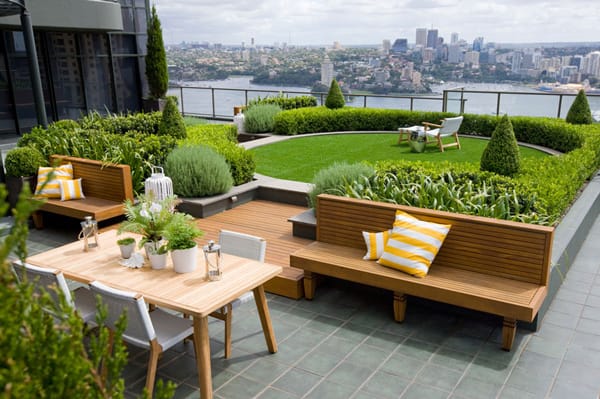
The modern urban landscape is defined by its unrelenting verticality. As concrete, glass, and steel continue to dominate our expanding cities, ground-level green space has become an incredibly rare luxury that urban planners and property developers can rarely afford to incorporate at scale. In direct response to this spatial deficit, forward-thinking architects, environmental engineers, and landscape designers are shifting their gaze upward. The rooftop garden, which was once largely considered a niche architectural indulgence reserved for luxury penthouses, has rapidly evolved into a critical, highly functional component of sustainable urban infrastructure. This transformation goes far beyond mere aesthetic enhancements or beautification efforts. Modern green roofs are complex, highly engineered ecosystems specifically designed to address some of the most pressing and complex challenges of modern urban density, ranging from climate change resilience to building energy efficiency and human well-being. By utilizing the vast, previously wasted expanses of flat commercial and residential roofs, cities can reclaim millions of square feet of impermeable surface and transform them into living, breathing landscapes.
To fully grasp the professional shift toward rooftop gardens, one must carefully examine the measurable, tangible returns on investment they offer to both building owners and the surrounding community. The benefits extend far beyond the immediate visual appeal, directly impacting the operational costs of a building and the broader ecological health of the urban grid. The most immediate and universally recognized environmental impact of a green roof is its profound ability to mitigate the Urban Heat Island effect. Traditional roofing materials, such as dark asphalt, tar, and standard gravel, absorb massive amounts of solar radiation throughout the day, significantly elevating local temperatures and creating stifling microclimates. In sharp contrast, the vegetation and engineered soil layers on a rooftop garden actively cool the surrounding air through the natural process of evapotranspiration. Extensive environmental studies have consistently demonstrated that during peak summer months, a living green roof can be significantly cooler than a conventional bare roof, which directly translates to reduced ambient temperatures in dense, highly trafficked urban corridors.
From a purely structural and economic standpoint, this immense cooling effect dramatically lowers the internal energy demands of the building itself. The dense layers of engineered soil and active vegetation act as a formidable thermal barrier, severely reducing heat flux through the roof structure. This organic insulation translates to substantial, measurable savings on heating, ventilation, and air conditioning operational costs, particularly in sprawling commercial buildings with expansive roof footprints. Furthermore, the green roof acts as a permanent protective shield for the underlying waterproofing membrane, defending these critical structural components from degrading ultraviolet radiation and the rapid, extreme temperature fluctuations that cause conventional roofs to expand, contract, and ultimately fail. This living protection can effectively double the natural lifespan of the roof structure, completely offsetting the initial, sometimes substantial installation costs over the total life cycle of the building. Beyond temperature control, stormwater management serves as another paramount driver for municipal green roof adoption. In highly developed metropolitan areas, non-permeable surfaces lead to massive, immediate water runoff during heavy rainfall, regularly overwhelming municipal sewage systems and leading to devastating urban flooding and waterway pollution. A properly engineered rooftop garden acts as a giant sponge. The deep growing medium and intricate root systems can retain a significant percentage of incoming rainfall, drastically slowing the release of excess water into the city drainage system and naturally filtering out atmospheric and surface pollutants in the process.
Designing a living rooftop garden is an incredibly complex professional exercise in architectural load balancing, moisture control, and precise structural engineering. Before any vegetation or soil can be considered, a building must be thoroughly and rigorously appraised by a licensed structural engineer to determine its absolute weight-bearing capacity. This critical assessment must meticulously account for dead loads, which include the permanent, unyielding weight of the roof structure, the saturated engineered soil, and the mature plants, alongside live loads, which encompass the temporary, shifting weights of human occupants, occasional snowfall, and intense wind pressures. Once structural integrity is definitively confirmed, the physical installation must follow a precise, multi-layered engineered system, as a failure in any single microscopic layer can lead to catastrophic, structurally compromising water damage to the building below.
The absolute foundation of this intricate system is the primary waterproofing membrane, which is arguably the most critical component of the entire endeavor. Unlike standard commercial roofing membranes, those utilized beneath green roofs must be exceptionally durable and entirely seamless. Directly above this vital layer sits the root barrier, a tough, resilient, and chemically impenetrable layer specifically designed to prevent aggressive plant root systems from mechanically penetrating and ultimately destroying the waterproofing below. Managing the flow and retention of water is a delicate, continuous balance; the roof ecosystem must retain exactly enough moisture to sustain the plant life during dry spells while efficiently shedding any excess liquid to prevent structural overloading and widespread root rot. This precise balance is achieved through the implementation of a dedicated drainage layer. This layer is typically composed of lightweight, molded plastic sheets featuring egg-carton-shaped dimples or deep beds of highly porous, lightweight gravel, which allows excess water to flow unimpeded toward the primary roof drains.
Situated directly above the drainage layer lies a crucial filter fabric. This specialized geotextile membrane is essential because it freely allows water to pass through into the drainage system while entirely preventing the fine, silty particles of the growing medium from washing away, which would rapidly clog the drains and destroy the soil profile. The growing medium itself is almost never traditional terrestrial topsoil, which is dangerously heavy when fully saturated with water and highly prone to destructive compaction over time. Instead, landscape professionals utilize precisely engineered soils, which are carefully calibrated blends of lightweight inorganic materials such as expanded shale, baked clay, or volcanic pumice, mixed with a specific ratio of organic compost. This customized mix provides an optimal, unchanging balance of nutrient retention, deep root aeration, and a consistently lightweight structure. Finally, the vegetation layer crowns the entire system, featuring plants that are painstakingly selected based on the specific, often harsh microclimate of the elevated roof. Extensive green roof systems, designed for sheer ecological benefit with shallow soil, rely heavily on hardy succulents like sedums, mosses, and drought-tolerant grasses. Intensive systems, which function as true, deep-soil parks in the sky, can support a much wider variety of life, including large ornamental shrubs, small trees, and lush perennials, though they require significantly more structural support and intensive daily maintenance.
Planting at a high urban altitude presents a uniquely difficult set of horticultural challenges that simply do not exist at ground level. A rooftop is a notoriously harsh, unforgiving microclimate characterized by extreme wind exposure, intense and unshaded solar radiation, and rapid, unpredictable fluctuations in ambient temperature. Wind is often the primary concern for elevated landscape architects. The severe aerodynamic forces present at higher elevations can cause rapid, fatal plant desiccation, literally stripping essential moisture from plant leaves much faster than the root systems can possibly absorb it from the relatively shallow engineered soil. High-velocity winds can also physically uproot establishing plants, snap branches, or violently displace the lightweight growing medium. To effectively counter these invisible forces, professional designers must proactively implement structural windbreaks. These often take the form of strategically placed, reinforced structural glass panels, heavily weighted architectural planters, or dense, hardy perimeter shrubs designed to absorb wind energy and create calmer, protected micro-zones within the larger garden space.
Solar radiation is equally relentless and unforgiving in these elevated environments. Without the comforting shade canopy naturally provided by adjacent buildings or mature street trees at ground level, rooftop plants must silently endure relentless, direct, baking sunlight from dawn until dusk. This harsh reality necessitates a highly calculated and careful selection of resilient flora. For expansive, low-maintenance roofs, specialized succulents remain the industry gold standard due to their incredible, evolved drought tolerance, minimal nutritional needs, and highly efficient shallow root systems. For lush, intensive amenity roofs designed for human recreation, designers must rely heavily on rugged native species or highly adaptive, specifically bred urban cultivars that have definitively proven their resilience in completely exposed, high-stress conditions. Tough ornamental grasses, hardy, deep-rooted perennials, and wind-resistant shrubs are strongly preferred over delicate, thirsty ornamentals.
Furthermore, because the artificial growing medium’s total volume is severely limited by stringent structural weight restrictions, essential nutrient depletion occurs at a drastically faster rate than it would in deep, natural ground soil. Therefore, professional rooftop gardens absolutely require a meticulously planned and consistently managed fertilization schedule to survive and thrive. This is most often delivered highly efficiently via fertigation, a modern agricultural process of automatically injecting precise, calculated doses of liquid fertilizers directly into the automated drip irrigation system, ensuring the soil biome maintains its optimal health and the diverse plants receive consistent, measured nutrition over the long term without the need for constant manual intervention.
Ultimately, while the impressive environmental metrics and complex structural engineering form the logical, necessary backbone of a rooftop garden’s justification, the profound social return on investment is what most frequently drives their enthusiastic inclusion in modern, high-end architectural briefs. The guiding concept of biophilic design—the intentional, thoughtful integration of natural, living elements into the sterile built environment to satisfy the innate, biological human desire to connect with nature—is currently a massively powerful driving force in contemporary commercial and residential real estate development. In sprawling corporate office spaces, fully accessible, lushly planted intensive green roofs serve as vital, highly sought-after restorative environments for employees. Extensive academic research in environmental psychology consistently and definitively demonstrates that regular visual and physical access to vibrant green spaces dramatically reduces workplace stress, significantly lowers resting heart rates, and measurably boosts overall cognitive function and daily productivity.
In this modern context, a well-designed rooftop garden immediately transitions from being a mere architectural curiosity into a highly valuable, tangible human resources asset, actively aiding in top-tier employee recruitment, long-term retention, and overall corporate well-being. Similarly, in dense residential high-rise developments, these elevated green spaces actively foster essential community cohesion. They successfully transform the often isolated, anonymous experience of vertical city living by providing a beautiful, shared communal ground where diverse residents can naturally interact, relax, and socialize safely above the chaotic city streets. This distinct social utility translates directly and reliably into measurable economic value; urban properties featuring beautifully designed, well-maintained rooftop garden amenities consistently command significantly higher premium lease rates and demonstrate much faster tenant absorption in competitive markets than comparable neighboring buildings that entirely lack these vital, living green spaces.