Modernity is persistently, overwhelmingly loud. Between the fragmented attention demanded by our digital interfaces and the sheer velocity of urban existence, silence has become a heavily mortgaged commodity. It is perhaps unsurprising that one of India’s most enduring philosophical exports—yoga—has found such widespread global resonance over the last century. What the world seems to be borrowing isn’t merely a sequence of complex physical stretches. Rather, it appears to be a distinctively Indian framework for serenity. It offers a somatic antidote to the chronic, humming anxiety of the modern age.
Before you read further…
Get the best & trending news directly in your email for free.
We frequently mistake yoga for a fitness regimen. In the West, it is routinely categorized alongside pilates or high-intensity interval training, measured in calories burned and heart rates elevated. Yet, tracing its lineage back through the codified aphorisms of Patanjali’s Yoga Sutras, compiled roughly two millennia ago, reveals a fundamentally different objective. The physical postures, or asanas, occupy a surprisingly marginal space in these classical texts. Only a handful of the 196 sutras mention posture at all. The primary architecture of the practice was originally designed to stabilize the fluctuations of consciousness—a concept Patanjali precisely defined as chitta vritti nirodha.
When a corporate executive in a brightly lit studio in London or Tokyo synchronizes their breath with movement, they are effectively tapping into an epistemological tradition forged in the ancient ashrams of the subcontinent. They are attempting, consciously or not, to metabolize a very specific kind of Indian stillness.

To understand the mechanics of this serenity, we must locate its geographical and cultural origins. It did not emerge in a vacuum. The early ascetics who formulated these practices retreated to the peripheries of society—the banks of the Ganges, the dense forests of the Himalayan foothills. They were, essentially, empirical researchers of their own nervous systems. They observed that the human mind, left to its own devices, is largely chaotic. It swings predictably between attachment to pleasure and aversion to pain. The quietude they cultivated was not a passive withdrawal from reality, though it is often mischaracterized as such by early Western scholars. It was a rigorous, highly disciplined engagement with awareness itself.
These early practitioners developed an intricate map of human physiology that predates modern neurology by centuries. Concepts like nadis (energy channels) and chakras (focal points) might read as esoteric to the contemporary scientific gaze. However, they functioned as highly effective metaphors for the central nervous system. By regulating the breath and holding the physical body in specific alignments, these yogis figured out how to hack the vagus nerve. They tricked the physiological form into profound states of rest, allowing the mind to finally settle.
Translating this quietude across cultural fault lines was never going to be a seamless process. The initial introduction of yogic philosophy to the West was largely intellectual. When Swami Vivekananda stood before the World’s Parliament of Religions in Chicago in 1893, he spoke of tolerance, universal acceptance, and the deep internal philosophy of Vedanta. He did not ask his audience in Illinois to perform a headstand. The physical practice followed decades later, heavily influenced by the cultural exchange at the early 20th-century Mysore Palace under the stewardship of Tirumalai Krishnamacharya.

Krishnamacharya is a fascinating figure in this lineage. He did not simply preserve static, ancient forms in amber. He actively adapted them. He synthesized traditional Indian wrestling exercises, British gymnastics, and ancient asanas to create sequences that could physically exhaust a restless mind. He recognized that the modern human nervous system requires deliberate, physical calibration before it can tolerate sitting still. This precise adaptability is arguably why the discipline thrives equally in unheated community halls in Berlin and hyper-modern wellness centers in Silicon Valley. The external aesthetics of the room might shift depending on the geography, but the underlying technology of the breath remains constant.
The rapid globalization of the practice over the last forty years has occasionally risked reducing a complex spiritual discipline to its visual surface. The contemporary yoga industry is a multibillion-dollar enterprise driven by designer activewear, expensive coastal retreats, and performative flexibility displayed on social media. It would be entirely too easy to dismiss this modern, studio-based iteration as shallow or culturally appropriative.
Doing so, however, might overlook something profound happening beneath the commercial veneer. The underlying somatic technology is remarkably resilient. Even in heavily stylized, consumerist environments, the physiological mechanics of the practice continue to function. The intentional elongation of the exhale during a seemingly superficial class still slows the heart rate. The targeted stimulation of the parasympathetic nervous system still enforces a state of internal pause. The practitioner, seeking perhaps only tighter hamstrings or a brief workout, is frequently ambushed by peace. The body remembers what the conscious mind has forgotten.
We find ourselves living in an era defined by cognitive overload. The human brain was simply not evolutionary calibrated to process the sheer volume of data, notifications, and low-grade existential threats we encounter daily. In this context, the specific brand of Indian serenity offered by yoga operates almost like a software patch for the human condition. It provides a reliable mechanism for rebooting an overwhelmed nervous system.
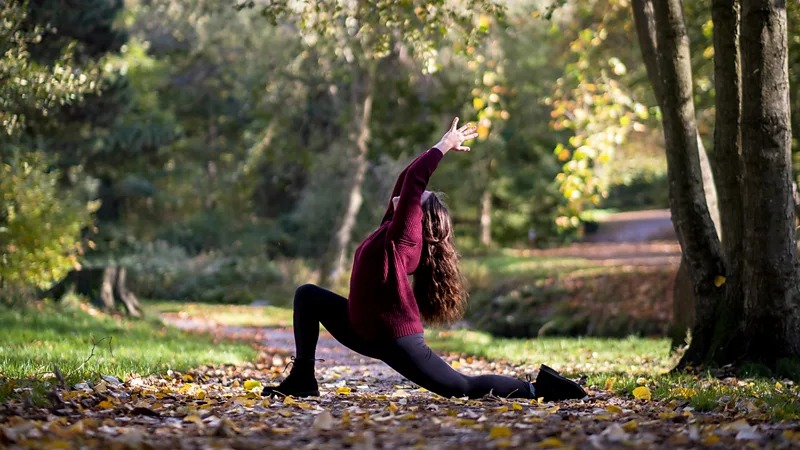
Consider the transition a person makes from the chaos of a rush-hour commute into the quiet confines of a yoga space. They remove their shoes. They are instructed to lie flat on the floor—a vulnerable position we rarely assume in public spaces outside of illness or injury. The teacher dictates the rhythm of the breath. For sixty or ninety minutes, the constant demand for economic productivity is suspended. This temporary suspension is a quiet rebellion against a world that demands constant output. India exported a technology of radical, intentional pause.
The true genius of this export lies in its accessibility. If serenity were only accessible to those willing to renounce their possessions and live ascetic lives, its global impact would be negligible. But the yogic framework provides physical stepping stones. The physical postures act as the entry point for a mind too agitated to meditate immediately. You cannot simply tell a stressed stockbroker to sit in the lotus position and clear their mind; the physical tension will make the silence agonizing. You have to tire the body out first.
Once that physical tension is metabolized through movement, the deeper philosophical work begins. The underlying worldview subtly infiltrates the practitioner’s daily life. Ideas of ahimsa (non-violence) or aparigraha (non-attachment) begin to seem less like ancient moral commands and more like practical, everyday guidelines for reducing personal friction. A graphic designer might start a physical practice purely to alleviate lower back pain. Ten years later, they might find their definition of personal success or failure fundamentally altered. The serenity sneaks in through the back door of the musculoskeletal system.
There is, understandably, an ongoing debate about authenticity. Critics argue that what is practiced in the urban centers of the West is so divorced from its Hindu roots that it hardly merits the name yoga. When a sacred Sanskrit chant is repurposed as background music for a fitness routine, a certain degree of cultural erasure undoubtedly occurs.
Yet, human cultures have always borrowed, adapted, and mutated ideas to suit their specific historical moments. The fact that an ancient Indian spiritual discipline has been successfully translated into a secular psychological tool is a testament to its intrinsic utility. The world did not adopt these practices because of a sudden, mass conversion to Eastern theology. It adopted them because they worked. They provided tangible relief. They delivered on the promise of serenity, even when administered in culturally diluted doses.
To truly grasp the nature of this exported peace, one must look closely at pranayama, the regulation of breath. In modern Western medicine, respiration is largely viewed as an involuntary biological function, operating in the background. The Indian yogic tradition, conversely, recognized breath as the only physiological process that is both entirely automatic and entirely susceptible to conscious control. It acts as the literal bridge between the conscious and subconscious mind.
By teaching the world how to breathe deliberately, India offered a profound psychological tool. When panic or anxiety sets in, the breath naturally becomes shallow and rapid, triggering a cascade of stress hormones. By artificially slowing and deepening the breath, a practitioner signals safety to the brain. This biofeedback loop is central to the serenity the practice promises. It is a portable sanctuary. It requires no specialized equipment, no monthly membership fee, and no specific religious belief system. The practitioner’s own lungs become the instrument of their pacification.
Ultimately, the specific brand of serenity that India incubated over thousands of years is not an escape hatch. It is not an invitation to disengage from the suffering, complexity, and noise of the modern world. Rather, it is a method for building the internal capacity required to face that world without being destroyed by it.

As the practice continues to cross borders and mutate into new forms—from hot studios in Manhattan to community centers in rural Australia—it serves as a quiet, enduring reminder of our shared physiological baseline. The most profound human discoveries aren’t necessarily technological marvels made of silicon, wires, and glass. Sometimes, they are simply rigorous, ancient methods for learning how to sit still in a noisy room. India gave the world a functional map to its own interior space. The sheer scale of its global adoption suggests exactly how desperately we needed the directions.