Tapan Dey
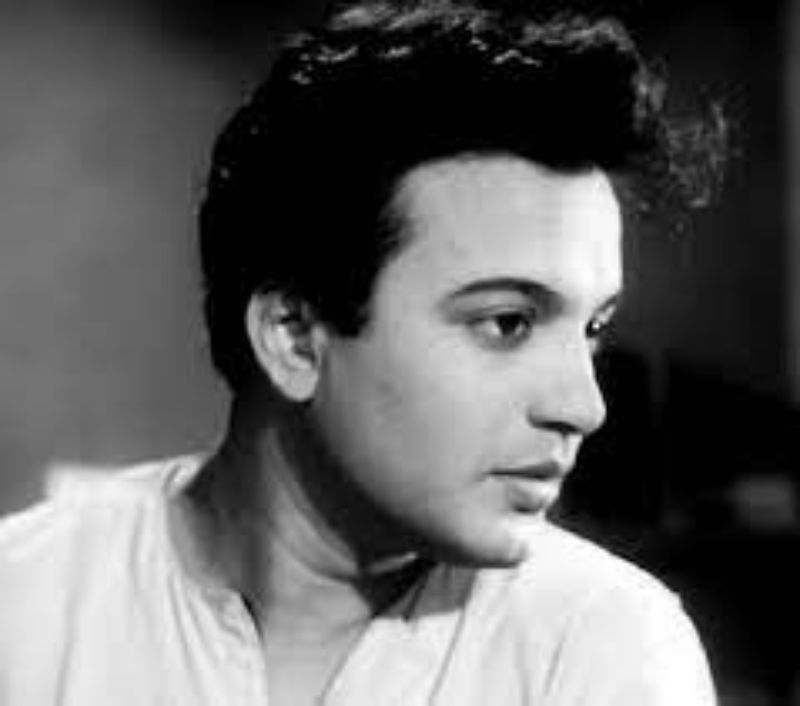
On September 3, 1926, a boy named Arun Kumar Chatterjee was born in his maternal home. This house was located at 51 Ahiritola Street in North Kolkata. His father, Satkari Chattopadhyay, worked as a film projectionist at Metro Cinema. This job gave the young boy an early window into the magical world of movies. His maternal grandfather lovingly gave him the name Uttam. However, his mother did not particularly like this name and preferred to call him Arun. He grew up in an ordinary middle-class family. He read widely and loved Rabindrasangeet as much as he loved Hollywood cinema. He also cared deeply about sports, food, clothes, conversation, and the vibrant social life of Calcutta.
He was a highly active and athletic young man. He swam competitively and became a swimming champion at the Bhowanipur Swimming Association for three consecutive years. He was also a skilled footballer who played in the right-back position. He remained a passionate, lifelong supporter of the Mohun Bagan football club. He even practiced wrestling to build his physical confidence. In 1936, he and his friends founded an amateur theatre group called the Lunar Club. Their very first stage production was Rabindranath Tagore’s famous play Mukut.
After completing his graduation, he had to earn a living. He initially worked as a clerk at the Kolkata Court. He later joined the Calcutta Port Trust as a clerk in the cash department. His monthly salary there was exactly 275 rupees. He spent his days surrounded by paperwork while dreaming of a completely different life. He also gave music lessons to earn extra cash for his family. He never let go of his deep passion for acting. He continued exploring his craft through amateur theatre on the side.
He finally made his film debut in 1948 with Nitin Bose’s movie Drishtidan. His cinematic journey was incredibly difficult at first. His debut and his next six to nine releases failed miserably at the box office. The film industry cruelly gave him the mocking nickname Flop Master General. He faced constant rejection and almost quit his acting dream. However, the spiritual master of his maternal family, Sripurna Sanyasi, saw his beautiful smile. The master predicted that the entire country would one day recognize him simply by the name Uttam.
That beautiful prediction finally started to come true in 1952. He found his first real breakthrough in Nirmal Dey’s film Basu Paribar. This movie also starred Sabitri Chatterjee, Supriya Devi, and Bhanu Banerjee. The very next year, in 1953, a single year changed his entire life. He starred opposite the legendary Suchitra Sen in the beloved comedy Sharey Chuattar. The film became a massive superhit. Audiences instantly fell in love with their magical on-screen pairing. They reached the absolute height of their success together with the 1954 blockbuster Agni Pariksha. Every director wanted to cast them in their movies. They quickly became one of the most successful screen couples in the entire history of Bengali cinema. Uttam deeply respected Suchitra Sen’s immense talent. He gladly agreed to have her name appear before his own on film credits and publicity posters.
Uttam Kumar was not just a natural talent who got lucky in life. He manufactured himself into a brilliant actor through pure observation and strict discipline. He carefully studied international stars like Gregory Peck, Gary Cooper, Clark Gable, Laurence Olivier, and Marlon Brando. He did not simply copy their glamour. Instead, he absorbed their psychological truth, their use of silence, and their subtle restraint. He became a highly technical actor with a very high emotional quotient. He knew exactly how to use his hands, his posture, his walk, and his famous smile. He understood the rotational angle of his neck and always presented the perfect profile for the cinematographer. He was an incredibly observant man who adapted to every role completely. He remained wonderfully free of any repetitive signature mannerisms.
He acted in around 250 films between 1948 and 1981. His profound influence ushered in the golden age of Bengali cinema. He became the ultimate romantic hero of everyday middle-class Bengali life. He redefined masculinity by being a hero who was flawed, who listened to women, and who was not afraid to cry on screen. However, he refused to be trapped in just romantic roles. He pushed his boundaries constantly to show his remarkable range. He played a romantic lead in massive hits like Harano Sur, Sagarika, Shaap Mochan, Sabaar Uparey, Pathey Holo Deri, and Deya Neya. He made audiences fall completely in love with his character Krishnendu in Saptapadi. He also excelled in great comedies like Bhrantibilash, Mouchak, Ogo Bodhu Shundori, and Dhanyi Meye. In Dhanyi Meye, he played a hilarious football fanatic.
He bravely took on morally complex and highly challenging characters. In 1959, he played a serious judge in Prabhat Mukherjee’s Bicharak. He played a despicable villain named Bhavesh Banerjee in Bagh Bondi Khela. He fascinated audiences as the morally ambiguous, sharp-witted cop Tinkori Haldar in Thana Theke Aschhi. He made people cry as Ganada in Jadubansha. He played an emotionally wounded man trapped in a failing marriage in Jatugriha. He portrayed the lonely and vulnerable businessman Ananga Dutta in Nishipadma. He was completely believable as a doctor in Agnishwar. He delivered unforgettable performances in Saheb Bibi Golaam, Chowringhee, Marutirtha Hinglaj, Shesh Anko, Ekhane Pinjar, Nagar Darpane, and Chhadmabeshi.
Many Bengali children in the 1980s and 1990s grew up in strict households where parents vetted their movies. Tapan Sinha’s Jhinder Bandi and Satyajit Ray’s Chiriakhana were rare exceptions allowed for children. In Chiriakhana, Uttam brilliantly played the famous detective Byomkesh Bakshi. Many fans truly discovered his genius later in life through VHS tapes of his old films. Watching films like Agnishwar, Bagh Bondi Khela, and Nayak became a beautiful discovery. For some, watching Nayak alongside Ray’s other films like Seemabaddha and Agantuk became an annual cinematic ritual.
His most celebrated collaboration was indeed with Satyajit Ray in the 1966 masterpiece Nayak. Ray wrote this film specifically with Uttam Kumar in mind. Ray confessed that he would have abandoned the project entirely if the star had turned it down. Uttam played Arindam Mukherjee, a celebrated but deeply insecure film star traveling to Delhi to receive an award. The film won the National Award for Best Bengali Feature Film and earned several high international honors. One incredibly iconic scene shows Arindam complaining to his roommate, Nirmal Ghosh. Arindam complains about a senior actor named Mukunda Lahiri, played by Bireswar Sen. Arindam argues that Lahiri purposely ruined their four scenes together because he could not handle Arindam’s intense preparation. Nirmal laughs at Arindam’s self-critical nature. Arindam then pounds his fist in sudden confidence and repeatedly declares he will go to the very top. This famous scene perfectly mirrored Uttam’s own intense ambition, self-awareness, and psychological contradictions.
Uttam Kumar did not limit himself exclusively to Bengali cinema. He also earned significant acclaim in the Hindi film industry. He starred in and produced the Hindi movie Chhoti Si Mulaqat. He later acted in other popular Hindi films like Amanush, Anand Ashram, Kitaab, and Dooriyaan. He also explored other complex aspects of filmmaking. He worked successfully as a producer, a director, and even a music director. He wanted to deeply understand how films were made from every possible angle.
Uttam Kumar often told people that he wanted to keep acting until his absolute last breath. He truly wished for the camera to be rolling when he died. In a deeply tragic way, his final wish actually came true. While shooting for the film Ogo Bodhu Shundori, he suddenly suffered a massive heart attack. Despite frantic medical efforts to save his life, he could not be revived. The beloved Mahanayak passed away on July 24, 1980. His stardom was such a powerful legacy that many of his films were successfully released even after his sudden death.
The year 2026 marks the grand birth centenary of this legendary actor. If he were alive, he would have proudly turned 100 years old. He notably shares this exact birth year with Hollywood icon Marilyn Monroe. Monroe was born Norma Jeane Mortenson on June 1, 1926. Like her, Uttam Kumar is a true icon whose massive legacy has completely outlasted his own era. Modern filmmakers constantly praise his genius. National Award-winning director Atanu Ghosh is known for films like Mayurakshi and Binisutoy. Ghosh believes Uttam was a thoroughly modern actor representing global acting revolutions. Acclaimed filmmaker Indrasis Acharya directed Bilu Rakkhosh, Pupa, and The Parcel. Acharya notes that Uttam was a highly observant actor fully aware of every inch of his body. Young filmmaker Arjunn Dutta recently won a National Award for his film Deep Fridge. Dutta says Uttam presented an alternative, humane vision of masculinity for everyday people.
In 2022, director Atanu Bose released a biographical film about his life titled Achena Uttam. This interesting biopic featured Saswata Chatterjee playing Uttam Kumar and Rituparna Sengupta playing Suchitra Sen. Today, long after his passing, Uttam Kumar remains a permanent part of the Bengali psyche and cultural identity. Modern stardom is often manufactured by algorithms, trends, and social media metrics. Uttam needed absolutely none of those things. In the 1973 film Basanta Bilap, which starred Soumitra Chatterjee and Aparna Sen, the actor Chinmoy Roy asks the actress Shibani Bose to praise him. He tells her to say “Ek bar bolo Uttam Kumar,” which means say Uttam Kumar just once. However, true fans of cinema will always say “Baar baar bolo Uttam Kumar,” meaning say his name again and again. He was a curious, dedicated chameleon who built himself from a simple court clerk into the eternal Mahanayak.