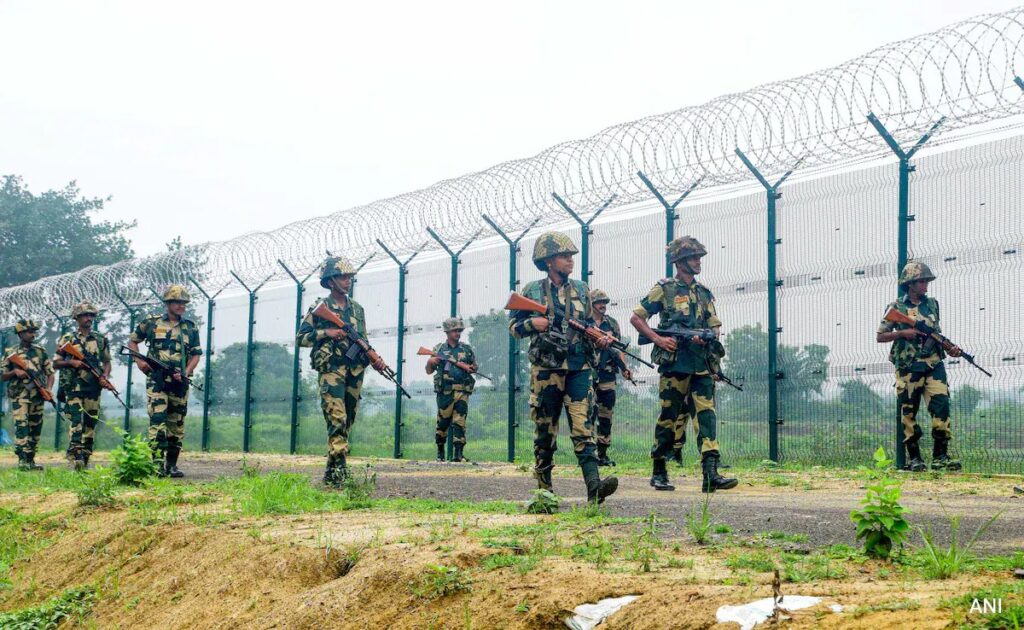
Over eighty per cent of India’s 4,096-kilometre border with Bangladesh now sits under the direct control of the Bharatiya Janata Party or its allies.
Assam, governed since 2021 by the combustible Himanta Biswa Sarma, who was re-elected in 2026, West Bengal, where Suvendu Adhikari’s BJP ended fifteen years of Trinamool Congress rule in May elections, sweeping Mamata Banerjee from Writers’ Building and into history, and Tripura, Meghalaya in coalition.
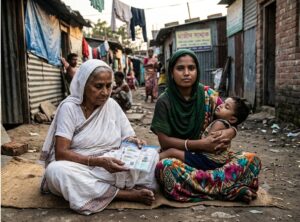
The eastern frontier is, for the first time, a contiguous BJP preserve. For the millions of Bengali-speaking Muslims who live on the Indian side of that border — citizens whose families have been in this soil for generations — this is an existential reckoning.
What makes the current moment particularly alarming is not merely the political uniformity, but the competitive ferocity between the two chief ministers. Sarma and Adhikari on who is the more aggressive Hindutva proponent spells ever new deportation drives, voter roll deletion, and proposals to build detention centres.
Taken together, they match the rhetoric of Union Home minister Amit Shah, and will hopefully catch theses of Prime minister Narendra Modi and Rashtriya Swayamsevak Sangh chief Mohan Bhagwat, earning them brownie points and further cementing their positions in the party and the state.
The Muslim minority is the terrain on which that contest is being fought.
Sarma had years of head start. With virulence, he has carried forward the transformation of Assam’s movement of cultural and land anxieties into an open war against Muslims of Bengali origin — a transformation originally engineered by the Rashtriya Swayamsevak Sangh.
The irony that he was a Congress leader until 2015 has long been buried under the sheer volume of his invective, the acrid abuses matched by his outlining sustained eviction drives on alleged encroachments, welfare restrictions targeting Bengali-speaking Muslims, and stricter voter scrutiny — a multi-pronged strategy designed to push what he calls undocumented migrants to leave on their own.
When RSS chief Mohan Bhagwat declared that India was incomplete without its Muslims, Sarma continued to reject such views and instead made provocative and inflammatory remarks — including a suggestion that a Muslim rickshaw puller asking for five rupees should be paid only four, distilling a political programme to a single sentence.
West Bengal’s new government has wasted no time establishing its own credentials in this grim competition.
The new BJP government led by Suvendu Adhikari moved immediately to implement a May 2025 Union Home Ministry directive on the detection and deportation of illegal migrants, indicating that those whose names are deleted from official records would not receive welfare benefits, and instructing district administrations to establish holding centres for foreigners awaiting deportation.
The electoral rolls became the first and most devastating instrument. Ahead of the 2026 West Bengal Assembly elections, nearly 91 lakh voters were deleted from the state’s electoral rolls following the Special Intensive Revision conducted by the Election Commission of India — a combination of around 63 lakh earlier deletions with an additional 27 lakh voters declared ineligible after judicial adjudication.
The Election Commission maintained this was routine, but the data told a different story. In constituencies like Nandigram, where Suvendu Adhikari himself was contesting, reports indicate that up to 95.5 per cent of deleted voters were Muslim, despite the community making up only about 25 per cent of the area’s population. Of the 27.16 lakh names removed during the final adjudication phase due to alleged logical discrepancies, about 17 lakh are estimated to be Muslims.
Union Home Minister Amit Shah, now certainly the second most powerful man in India, stated in Parliament that the BJP was protecting democracy through a policy of “detect, delete, and deport” — generating fear among Muslims and what observers believe motivated historically high Muslim voter participation in the Bengal assembly elections, as the community sought to counter what it perceived as a coordinated effort to reduce it to second-class citizenship.
The high turnout was not enough. The BJP won.
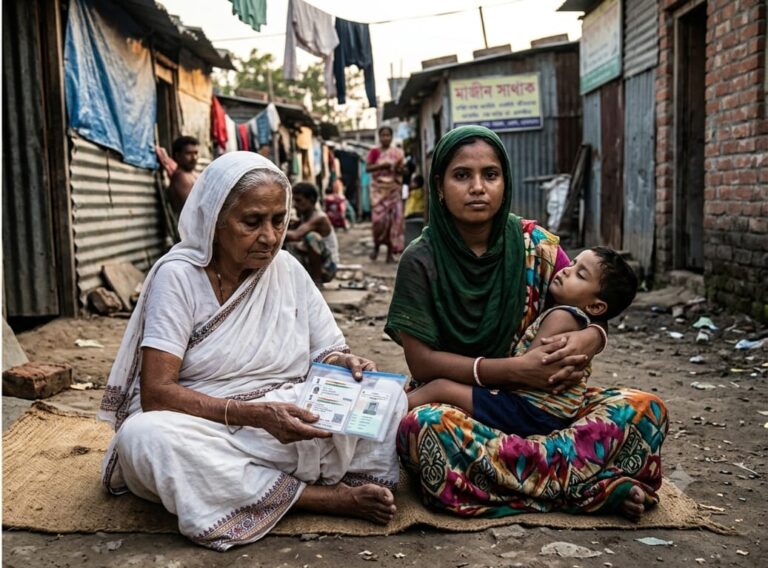
What followed the victory was as sad as it was bizarre – hundreds of suspected undocumented individuals gathered in long queues at the Bithari-Hakimpur border exit in West Bengal’s North 24 Parganas, seeking to cross into Bangladesh. Men, women, children at a border checkpoint — some with documents, some without, all afraid.
The language of “infiltrators” and “ghuspaitiyas” systematically obscures what the New York based Human Rights Watch sees as the Modi government ’s targeting of Bengali-speaking Muslims from West Bengal and Assam for political gain. The HRW said India expelled over 1,500 Muslim men, women, and children to Bangladesh between 7 May and 15 June alone.
More damningly, Bangladesh identified 2,479 incidents of India pushing people across the border between May 2025 and January 2026, of whom the Border Guard Bangladesh confirmed at least 120 individuals as Indian nationals — not Bangladeshi citizens at all.
Bangladesh’s newly elected BNP government, which swept the February 2026 elections with Tarique Rahman returning from exile to lead the campaign, came into office wanting a reset.
The Yunus interim period had seen relations cool sharply, accusations of attacks on Hindu minorities in Bangladesh, and Dhaka tilting perceptibly towards Pakistan and China. The BNP’s instinct was to stabilise. India responded with the correct gestures — Prime Minister Modi sent an invitation for a visit; External Affairs Minister Jaishankar had attended the funeral of former BNP chairperson Khaleda Zia; foreign minister Rahman visited New Delhi in what both sides described as a goodwill visit.
Rahman stated plainly that Bangladesh would act if push-in incidents occurred amid the change of power in West Bengal — warning against India ramping up informal deportations that dump people across the fence without proper verification.
Bangladesh formally protested the deportations, with Dhaka lodging a diplomatic complaint with India and its foreign affairs adviser confirming that a further protest note was forthcoming. The BNP government has insisted that repatriation must happen through formal bilateral mechanisms — a principle India has systematically ignored.
BJP control of almost all the border states gives New Delhi coordinated leverage it never had when Mamata Banerjee sat in Kolkata obstructing Teesta water-sharing agreements and resisting central security objectives.
Mamata’s departure removes a veto and, in principle, opens diplomatic space. The Teesta negotiations, frozen for over a decade by state-centre friction, could now advance. Trade and transit connectivity, which benefits both economies, could be streamlined.
But the political logic of both BJP chief ministers works directly against them. Sarma and Adhikari are not governing towards regional stability, but eyeing the next election, the next Hindu consolidation.
Bangladesh has simultaneously increased vigilance along its border, stepping up patrols and awareness campaigns in frontier districts to prevent unauthorised crossings — a reactive posture that signals how far trust has eroded. The BNP government does not want to appear weak domestically.
Prime minister Tarique Rahman, in his maiden role as head of government, cannot be seen to accept big-brother bullying by New Delhi without consequence.
The Bengali-speaking Muslim communities on both sides of this border share language, culture, food, memory, even genealogy. The families that partition scattered across that line in 1947 — and in partitions of the once mammoth state earlier, were Bengali before they were anything else.
What the BJP has achieved, with breathtaking political efficiency, is the transformation of a shared community ethos into a security threat — in Assam through the NRC and the Citizenship Amendment Act’s explicit discrimination against Muslims, in West Bengal through the voter roll purge and the deportation drives.
The “Miya Muslim” of the Brahmaputra valley and the Bengali Muslim of Murshidabad are Indians whose citizenship is being systematically questioned ro please vote banks in the states, and across north India.
India and Bangladesh are bound together by rivers, by history, by the simple fact of a 4,096-kilometre border neither can move. That geography demands a statecraft which does not seem to be on the political horizon.